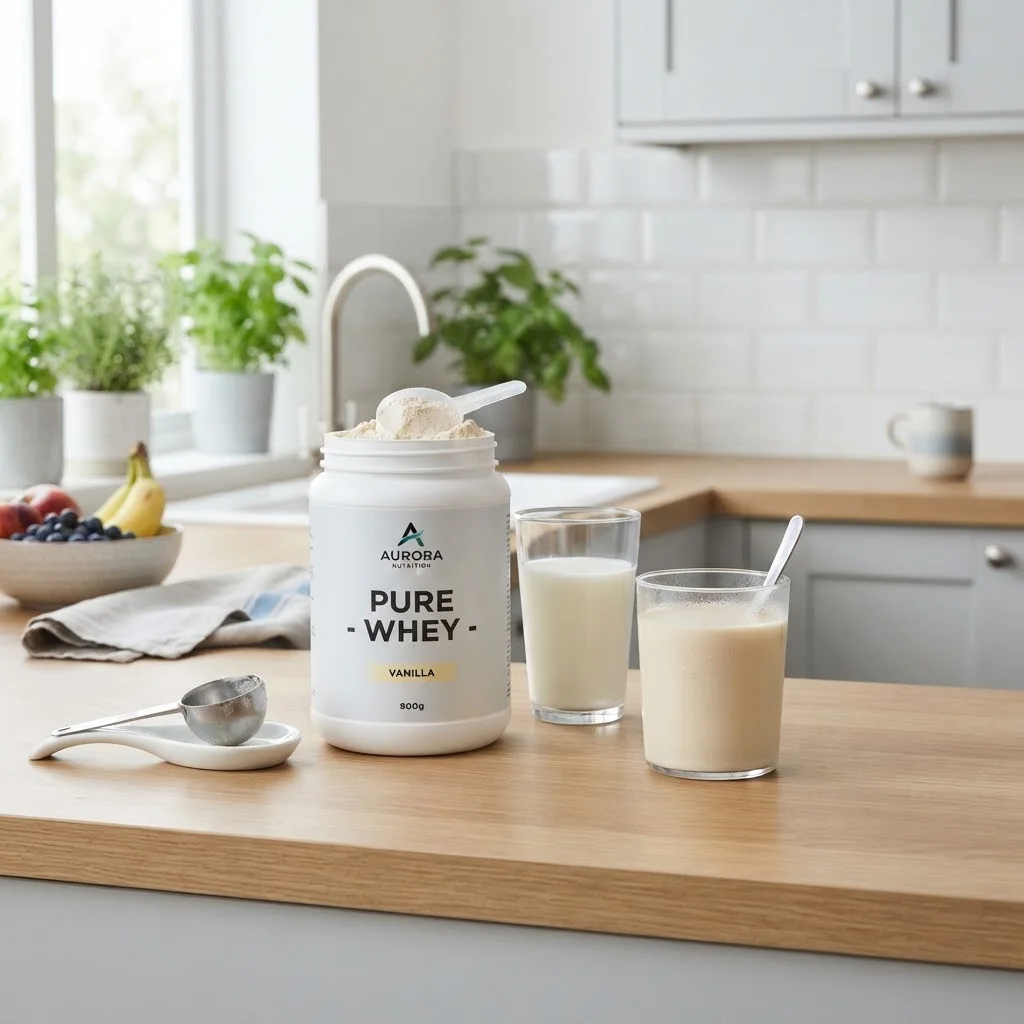
Concentrate is made by filtering water and some lactose and fat from liquid whey. WPC80 usually describes a raw ingredient around 80% protein on a dry basis, while a flavored final product may contain a lower percentage.
Quick answer
For most people who tolerate dairy, concentrate is a complete, effective, cost-efficient protein. Compared with isolate, it usually has slightly less protein and more lactose and fat per serving, but the difference is often small in a whole diet. Choose by tolerance, budget, and protein yield.
What matters
- Calculate protein percentage from protein grams divided by serving weight.
- Bloating may come from lactose, sweeteners, or shake size.
- Concentrate does not necessarily have inferior amino-acid quality.
- It is unsuitable for true milk allergy.
- Look for transparent ingredients and quality testing.
A practical approach
- Read protein grams.
- Check lactose and sugar.
- Calculate cost per 25 g protein.
- Test tolerance with half a serving.
- Choose by need.
Frequently asked questions
Is concentrate worse for muscle?
With equal protein and diet, practical differences are usually small.
For lactose intolerance?
Some tolerate small amounts, but low-lactose isolate may suit better.
References
- ISSN Position Stand: Protein and Exercise — https://pubmed.ncbi.nlm.nih.gov/28642676/
- Whey Protein Supplementation and Muscle Mass and Strength: Meta-Analysis — https://pubmed.ncbi.nlm.nih.gov/24435468/
- FDA — Questions and Answers on Dietary Supplements — https://www.fda.gov/food/information-consumers-using-dietary-supplements/questions-and-answers-dietary-supplements