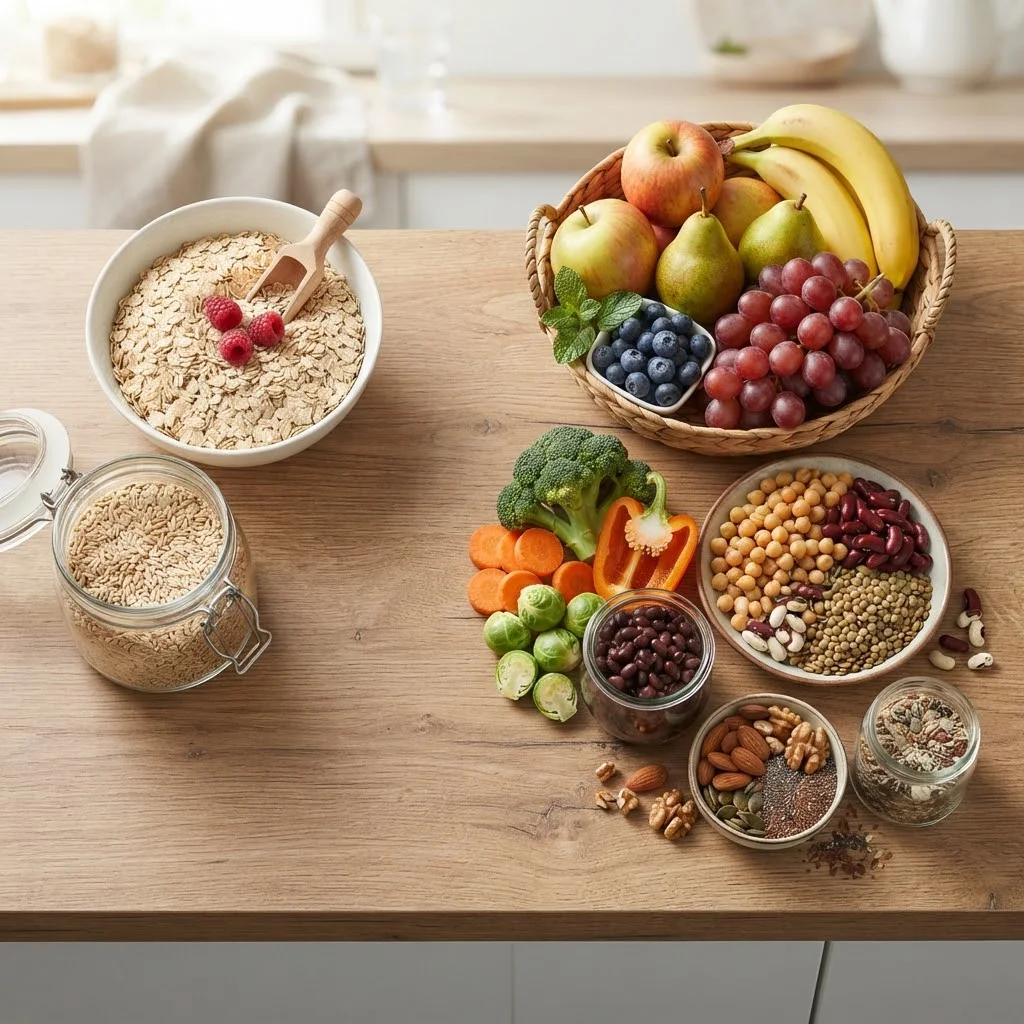
Fiber is the portion of plant carbohydrate that is not fully digested in the small intestine. This allows it to influence bowel function, fullness, the gut microbiome, and nutrient absorption. Increasing it too quickly, however, can cause bloating and discomfort.
The short answer
Soluble fiber interacts with water and may form a gel-like texture, while insoluble fiber helps stool bulk and movement. Most plant foods contain a mixture, so dietary variety matters more than chasing one isolated type.
Main sources of fiber
Legumes, oats, whole grains, fruit, vegetables, nuts, and seeds are major sources. Juice generally contains less fiber than whole fruit, and highly refined products lose much of the fiber found in the original grain.
Fiber and digestion
More fiber is not automatically better for every digestive symptom. Some people become bloated after rapidly increasing legumes or bran. Raise intake over several weeks, drink enough fluid, and choose tolerated sources. Active gastrointestinal conditions may require individualized advice.
Fiber and appetite control
Fiber-rich foods often require more chewing and add volume, which may support fullness. Fiber is not a magic weight-loss tool, though; adding seeds or fiber products does not override consistently excessive calorie intake.
Practical tips
Make one small change every few days.
Choose whole fruit more often than juice.
Start legumes in smaller portions and cook them thoroughly.
Bottom line
Numbers are starting points, not verdicts. The right choice must fit goals, calories, training quality, digestion, and real trends. Make small changes and assess them over several weeks.
References
WHO — Carbohydrate Intake for Adults and Children — https://www.who.int/publications/i/item/9789240073593
National Academies — Essential Guide to Nutrient Requirements — https://www.nationalacademies.org/read/11537/page/79