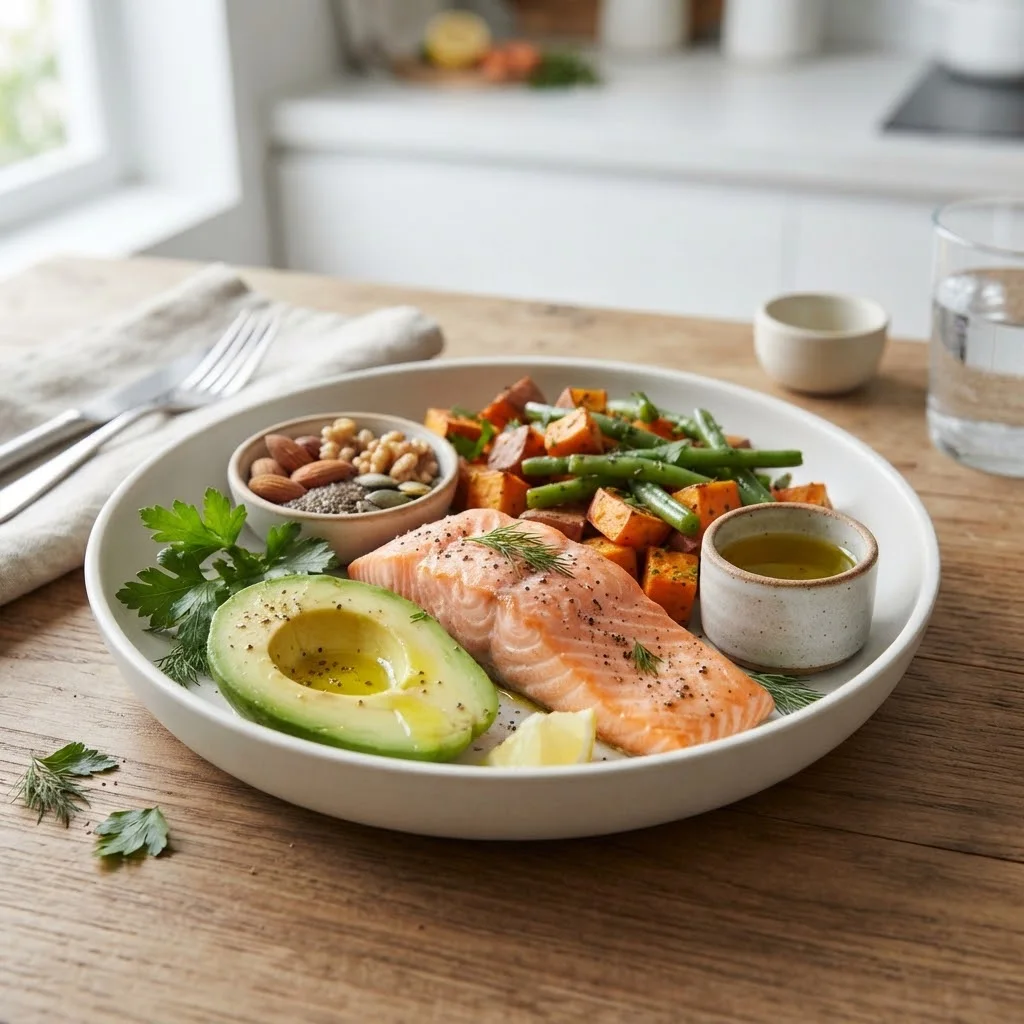
Dietary fat is more than a calorie source. It supports cell membranes, absorption of fat-soluble vitamins, and essential fatty-acid intake. Because fat is energy dense, its amount still needs to fit total calories and training demands.
The short answer
For many active adults, roughly 20–35% of daily energy from fat is a practical range. Chronically very-low-fat diets can make an adequate diet harder to build. Fat quality matters as much as the percentage.
Convert the percentage into grams
At 2,400 kcal with 25% from fat, 600 kcal come from fat. Dividing by nine gives about 67 g. This is a starting calculation that must still fit protein, carbohydrate, and the overall calorie target.
Which fats deserve priority?
Emphasize olive or canola oil, nuts, seeds, avocado, and fish. Limit saturated fat and avoid industrial trans fat as far as practical. The aim is not moral perfection around one food; the overall pattern matters.
Fat around training
A very high-fat meal immediately before training may slow digestion and feel heavy. Most people do better with moderate fat close to exercise and larger fat servings farther from the session.
Practical tips
Measure oils, nuts, and nut butter because calories accumulate quickly.
Include fish regularly when accessible and appropriate.
Do not drive fat intake toward zero during weight loss.
Bottom line
Numbers are starting points, not verdicts. The right choice must fit goals, calories, training quality, digestion, and real trends. Make small changes and assess them over several weeks.
References
National Academies — Dietary Reference Intakes for Macronutrients — https://www.nationalacademies.org/read/10490
WHO — Healthy Diet — https://www.who.int/news-room/fact-sheets/detail/healthy-diet
Academy of Nutrition and Dietetics, Dietitians of Canada and ACSM — Nutrition and Athletic Performance — https://pubmed.ncbi.nlm.nih.gov/26920240/