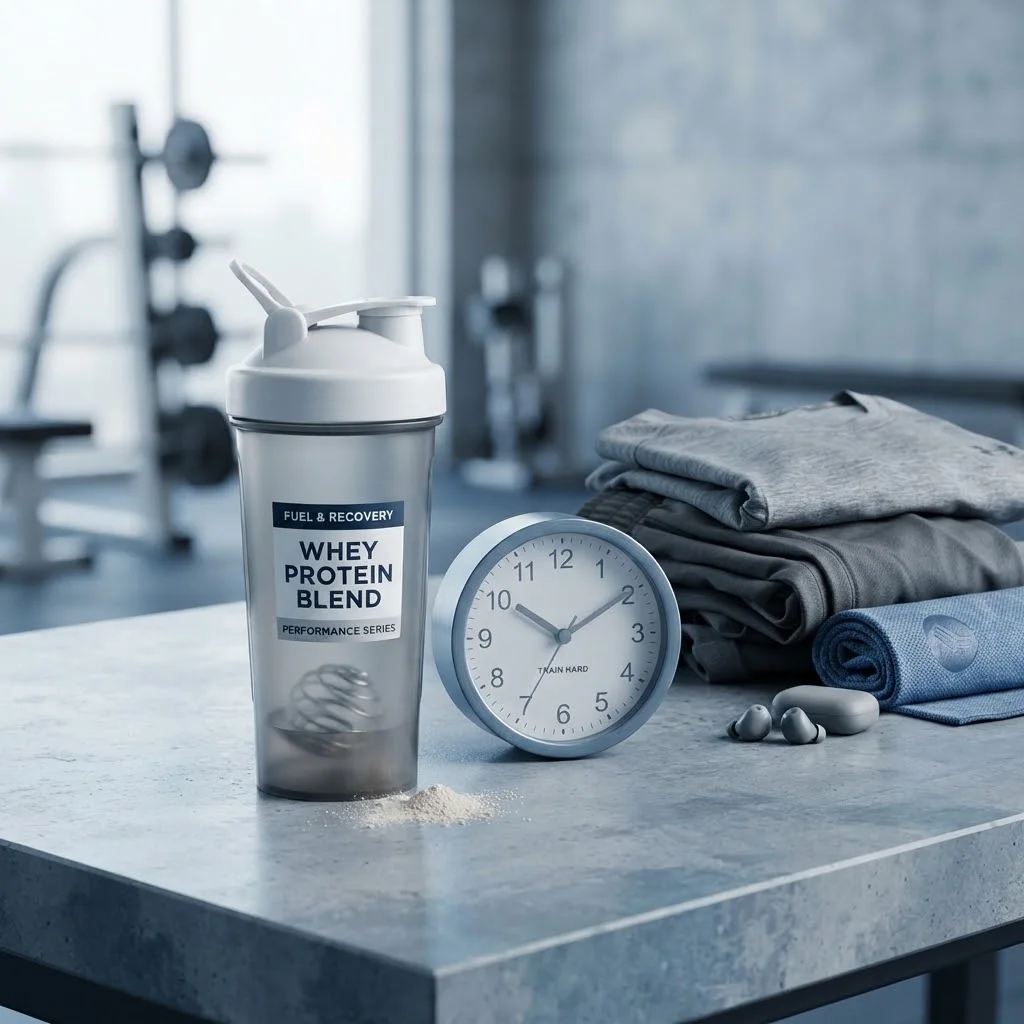
Resistance exercise makes muscle more responsive to protein for many hours. There is no need to drink a shake anxiously in the locker room. If a protein-rich meal was eaten a few hours before training, the next serving can follow comfortably afterward.
Quick answer
Priorities are total daily protein, distribution across meals, then timing around training. A serving of roughly 20–40 g high-quality protein is practical for many active adults, though body size, age and meal composition matter. Whey can be used at breakfast, as a snack, after training or whenever a gap exists.
What matters
- Post-workout is convenient, not the only opportunity.
- A pre-workout shake is unnecessary after a substantial meal.
- Regular distribution is generally preferable to saving everything for dinner.
- Whey before bed is optional.
- Timing cannot rescue inadequate total intake.
A practical approach
- Calculate a daily target.
- Distribute it across 3–5 sensible meals.
- Place training between two servings.
- Use whey where a meal falls short.
- Track weekly consistency, not minutes.
Frequently asked questions
How many minutes after training?
There is no exact deadline; a meal within the surrounding hours is reasonable.
Morning or night?
Whichever improves daily distribution.
References
- The Effect of Protein Timing on Muscle Strength and Hypertrophy — https://pubmed.ncbi.nlm.nih.gov/24299050/
- ISSN Position Stand: Nutrient Timing — https://pubmed.ncbi.nlm.nih.gov/28919842/
- ISSN Position Stand: Protein and Exercise — https://pubmed.ncbi.nlm.nih.gov/28642676/