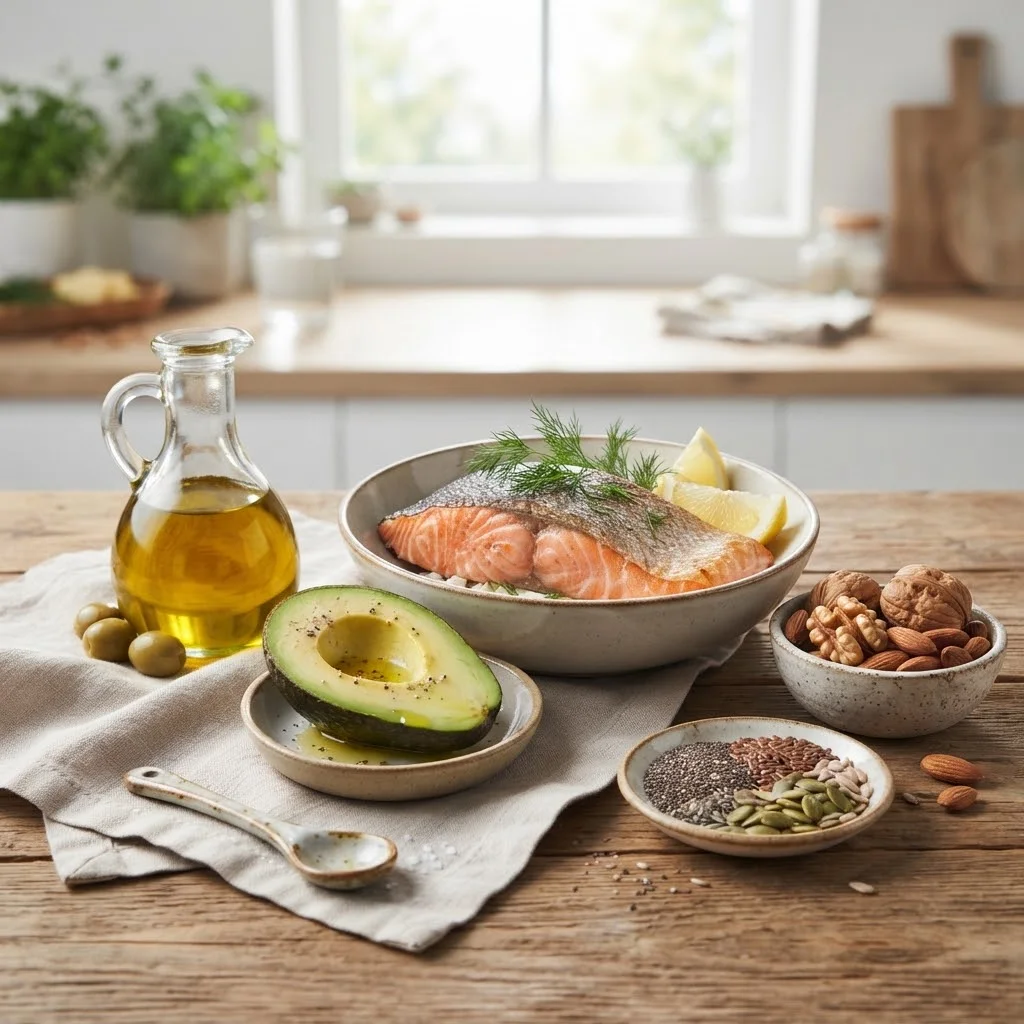
“Healthy fat” does not mean unlimited fat. Olive oil, nuts, seeds, avocado, and oily fish are valuable foods, but they remain energy dense. A good choice combines favorable fat quality with an appropriate portion.
The short answer
Obtain most dietary fat from unsaturated sources such as olive or canola oil, nuts, seeds, avocado, and fish. Measure oils and nuts, especially when losing weight.
Monounsaturated fat
Olive oil, avocado, and many nuts are useful sources. Olive oil can dress salads or support moderate-heat cooking, while measured nuts make a convenient snack.
Polyunsaturated fat and omega-3
Oily fish such as salmon and sardines, walnuts, and selected seeds provide polyunsaturated fats. Plant foods mainly provide ALA, while fish supplies EPA and DHA. Dietary variety is preferable to relying on one source.
How to control calories
A spoonful of oil or a large handful of nuts can add substantial energy. Measure oil and portion nuts instead of eating from the bag. Do not eliminate fat; assign it a deliberate place in the plan.
Practical tips
Cook fish without excessive added oil.
Add an appropriate amount of ground flax or chia to yogurt or oats.
Check labels for hydrogenated oils.
Bottom line
Numbers are starting points, not verdicts. The right choice must fit goals, calories, training quality, digestion, and real trends. Make small changes and assess them over several weeks.
References
WHO — Healthy Diet — https://www.who.int/news-room/fact-sheets/detail/healthy-diet
National Academies — Dietary Reference Intakes for Macronutrients — https://www.nationalacademies.org/read/10490