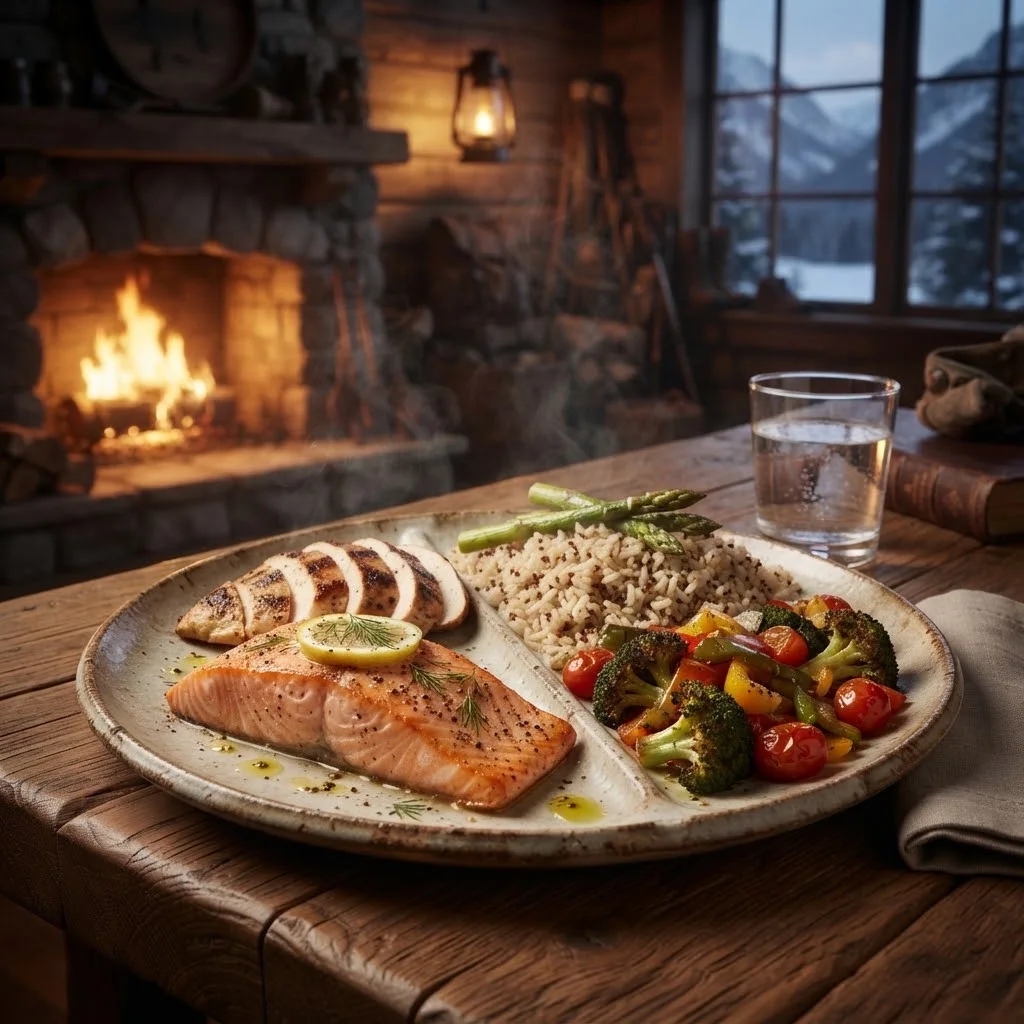
Dinner cannot build muscle by itself, but it can be an important part of the plan, particularly after evening training. It should provide meaningful protein, help meet the day’s energy target, and avoid being so large or fatty that it disrupts sleep. Uncontrolled bulking dinners can add unwanted fat.
The short answer
A muscle-gain dinner should complete daily protein and energy needs, support recovery with appropriate carbohydrate, and remain comfortable for sleep.
Choose a main protein source
Center dinner on poultry, fish, lean meat, eggs, dairy, soy, or a planned legume combination. The serving should help complete daily protein; roughly 25–40 g suits many active adults. If earlier meals already covered the target, dinner does not need to become unnecessarily oversized.
Carbohydrate for recovery
Rice, bread, potatoes, pasta, or legumes can restore energy after evening training. Eating carbohydrate at night does not independently cause fat gain; a sustained calorie surplus is the main driver. Match the serving to training volume and the daily calorie goal.
Balance vegetables and fat
Cooked vegetables or salad contribute fiber and micronutrients. Olive oil, nuts, or avocado add energy and useful fats, but a very high-fat oversized meal close to bed may worsen heaviness or reflux. Individual tolerance should guide the amount.
Four dinner examples
Rice with chicken and vegetables; potatoes with fish and salad; pasta with lean meat and vegetables; or lentils and rice with yogurt and eggs. To increase calories, first enlarge the carbohydrate serving or add a measured amount of fat. With low appetite, split intake between dinner and a small pre-sleep snack.
Practical checklist
- Match portion size to calorie goals and training volume.
- Test unfamiliar food on an ordinary day first.
- Individualize general advice when a medical condition is present.
Bottom line
A useful plan meets daily needs and remains repeatable for weeks and months. One meal cannot repair an inadequate diet, and one imperfect choice does not erase the results of a consistent pattern.
References
- ISSN Position Stand: Protein and Exercise — https://pubmed.ncbi.nlm.nih.gov/28642676/
- Nutrition and Athletic Performance — Academy of Nutrition and Dietetics, Dietitians of Canada and ACSM — https://pubmed.ncbi.nlm.nih.gov/26920240/
- ISSN Position Stand: Nutrient Timing — https://pubmed.ncbi.nlm.nih.gov/28919842/