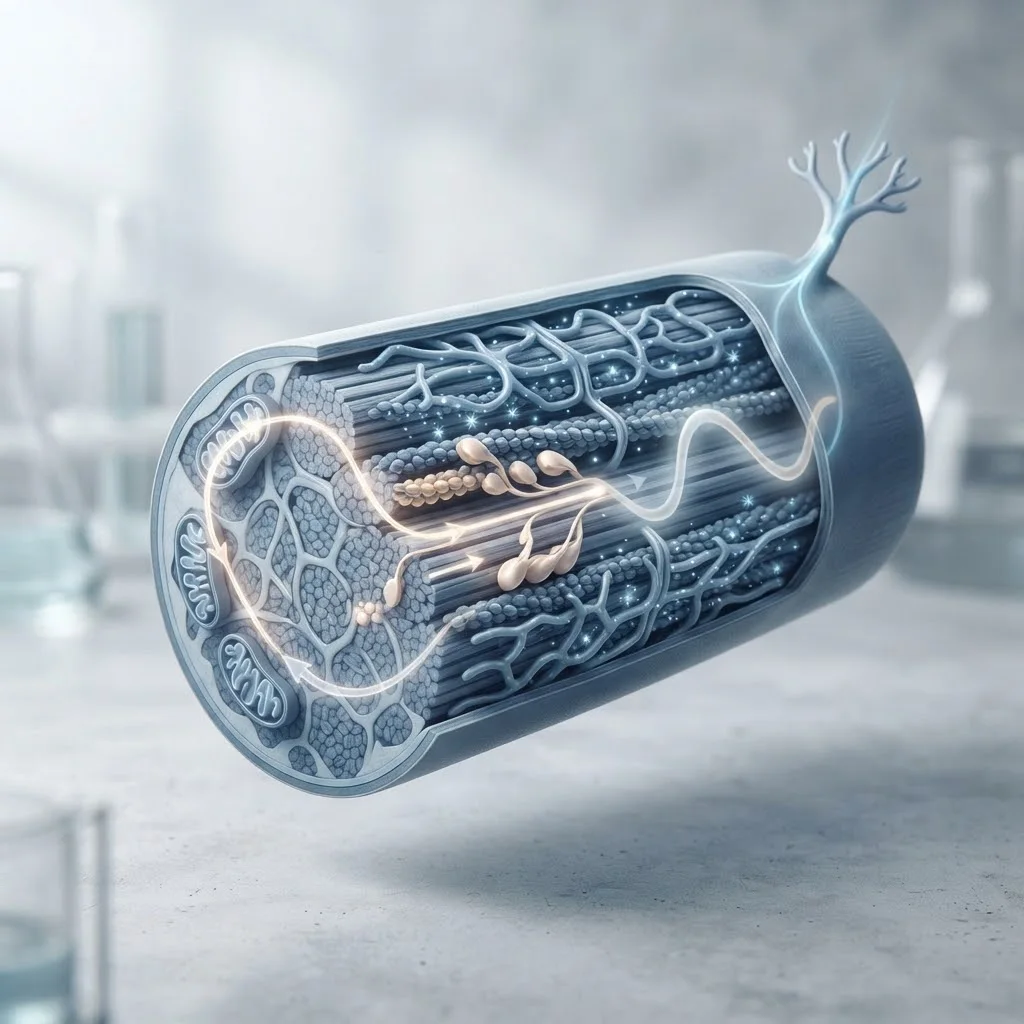
Creatine is not a hormone, steroid, or stimulant. The body makes it from amino acids, and most is stored in muscle as creatine and phosphocreatine. Meat and fish provide some, while supplementation can raise muscle stores beyond a typical diet.
Quick answer
Creatine helps rapidly regenerate ATP, the cell’s immediate energy currency. This can modestly improve repeated short, intense efforts such as lifting sets and sprints. With consistent training, that extra capacity may support strength and lean-mass gains; creatine does not build muscle by itself without training.
What matters
- Creatine monohydrate is the reference form with the largest body of efficacy and safety research.
- Responses vary. Baseline diet, muscle stores, training type, and adherence can change the size of benefit.
- Early weight gain commonly reflects more water inside muscle; it is not the same as fat gain or generalized swelling.
- A common simple approach for healthy adults is 3–5 g of monohydrate daily. Loading is optional and only saturates stores faster.
- People with kidney disease, pregnancy or breastfeeding, minors, and medication users should seek qualified advice first.
A practical approach
- Choose plain monohydrate for a relevant goal.
- Use a consistent tolerable daily dose.
- Time it for convenience.
- Track weight and performance for several weeks.
- Stop and assess unexpected symptoms.
Frequently asked questions
Is creatine only for bodybuilders?
No. It is most relevant to repeated high-intensity work across sports, depending on the event’s demands.
Is it instant?
Muscle stores must rise: days with loading and usually several weeks without it.
References
- NIH Office of Dietary Supplements — Exercise and Athletic Performance Supplements — https://ods.od.nih.gov/factsheets/ExerciseAndAthleticPerformance-HealthProfessional/
- ISSN Position Stand: Safety and Efficacy of Creatine Supplementation — https://pubmed.ncbi.nlm.nih.gov/28615996/
- Common Questions and Misconceptions About Creatine Supplementation — https://pubmed.ncbi.nlm.nih.gov/33557850/