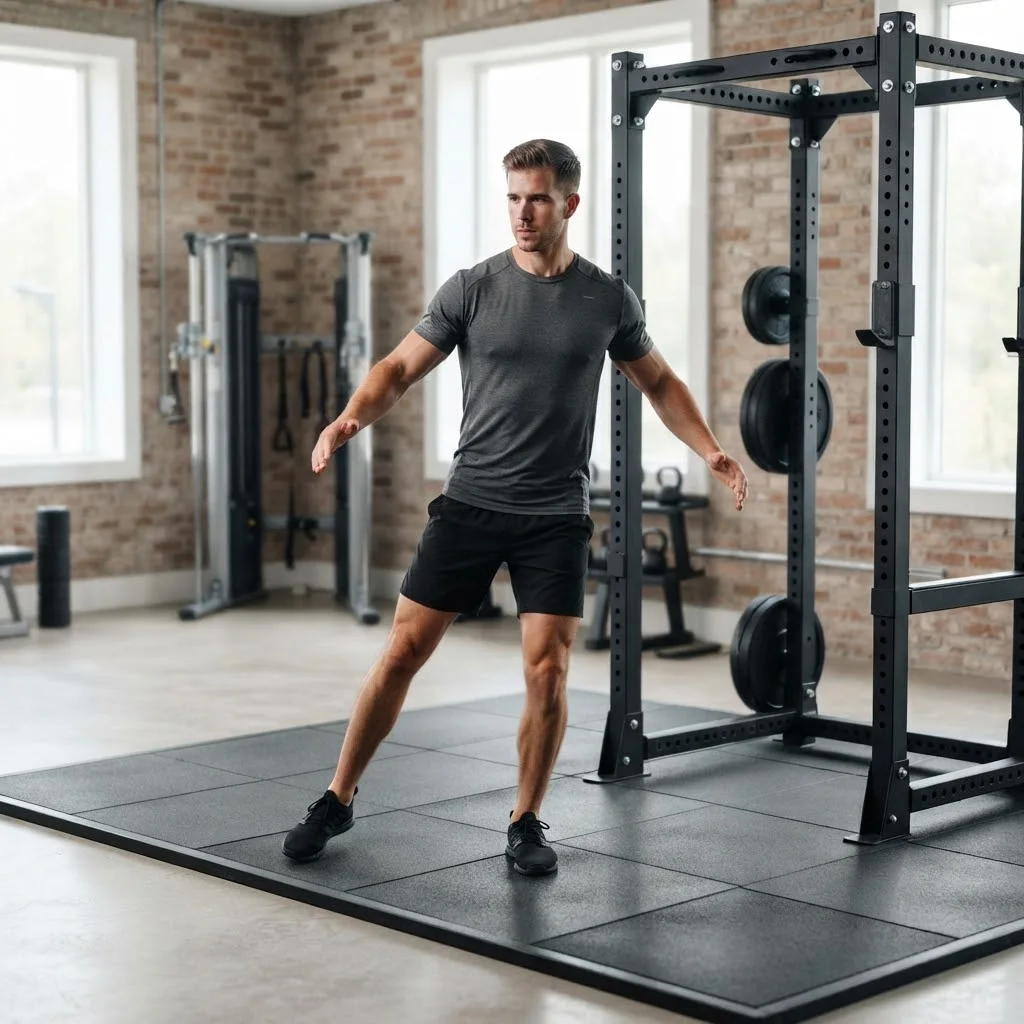
Stretching before lifting is not forbidden. Type, duration, and placement in the warm-up determine whether it helps or hinders. The sections below turn the evidence into practical decisions you can adapt to your goal, recovery, and real training schedule.
The short answer
Dynamic movement and exercise-specific sets should usually form the core of a lifting warm-up. Brief static stretching may help a limited range, but prolonged stretching of a muscle immediately before heavy work can slightly reduce acute strength. Follow any stretch with dynamic movement and light sets.
What matters
Dynamic stretching moves a joint with control through the range needed in training, such as walking lunges, controlled shoulder circles, or light squats.
Static stretching holds a position. Reviews find larger acute performance effects mainly with longer holds, especially beyond roughly 60 seconds per muscle group.
If a brief calf or hip-flexor stretch improves squat setup, use it purposefully, then perform dynamic repetitions and ramp-up sets to restore force readiness.
Stretching should not cause sharp pain, tingling, or numbness. Persistent painful restriction should be assessed rather than forced.
How to apply it
- Raise body temperature first.
- Use dynamic drills relevant to the session.
- Keep static stretching brief and purposeful.
- Finish with exercise-specific ramp-up sets.
Common mistakes
- Long static holds for every muscle
- Stretching cold tissue aggressively
- Ignoring neural or joint symptoms
- Replacing ramp-up sets with stretching
Bottom line
Brief stretching is reasonable when it improves range without reducing performance. For most strength sessions, dynamic movement and specific practice deserve priority.
References
- Review — Acute effects of static stretching on strength and power — https://pubmed.ncbi.nlm.nih.gov/31849713/
- Systematic review — Effects of warming up on physical performance — https://pubmed.ncbi.nlm.nih.gov/19996770/