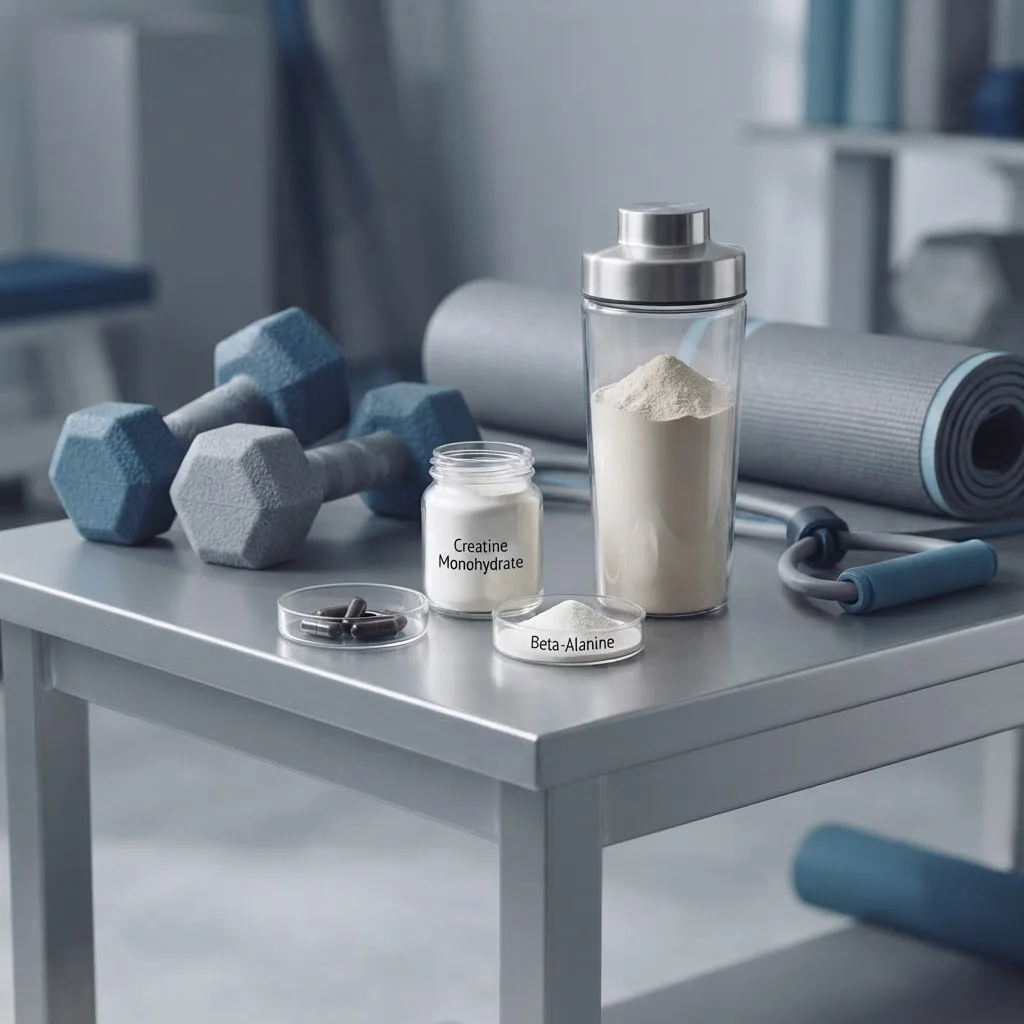
For specific goals, creatine monohydrate, caffeine, beta-alanine and in some sports nitrate or bicarbonate have stronger evidence; protein helps when food is insufficient. An informed choice considers diet, relevant testing and the risk of excessive intake.
Quick answer
Strong evidence does not mean universal suitability. Sport type, dose, timing, adverse effects and anti-doping rules matter. Deficiency treatments such as iron or vitamin D work reliably when a true need exists. Start from a precise goal, not a long stack. A supplement is useful when it addresses a defined need at an appropriate, monitorable dose.
What matters
- Do not diagnose deficiency by guesswork.
- Read the active amount on the label.
- Count food and supplement intake together.
- Higher doses are not always better.
- Medical conditions and medicines need review.
A practical approach
- Review the goal and current diet.
- Use appropriate testing or assessment when needed.
- Choose a simple independently tested product.
- Use an appropriate amount for a defined period.
- Reassess outcomes and adverse effects.
Frequently asked questions
Do athletes always need more?
No; needs depend on sport, diet, sweat losses, health and deficiency.
Can products be combined?
Only after checking overlapping doses and interactions.
References
- NIH ODS — Exercise and Athletic Performance Supplements — https://ods.od.nih.gov/factsheets/ExerciseAndAthleticPerformance-HealthProfessional/
- ISSN Position Stand: Protein and Exercise — https://pubmed.ncbi.nlm.nih.gov/28642676/
- FDA — Questions and Answers on Dietary Supplements — https://www.fda.gov/food/information-consumers-using-dietary-supplements/questions-and-answers-dietary-supplements