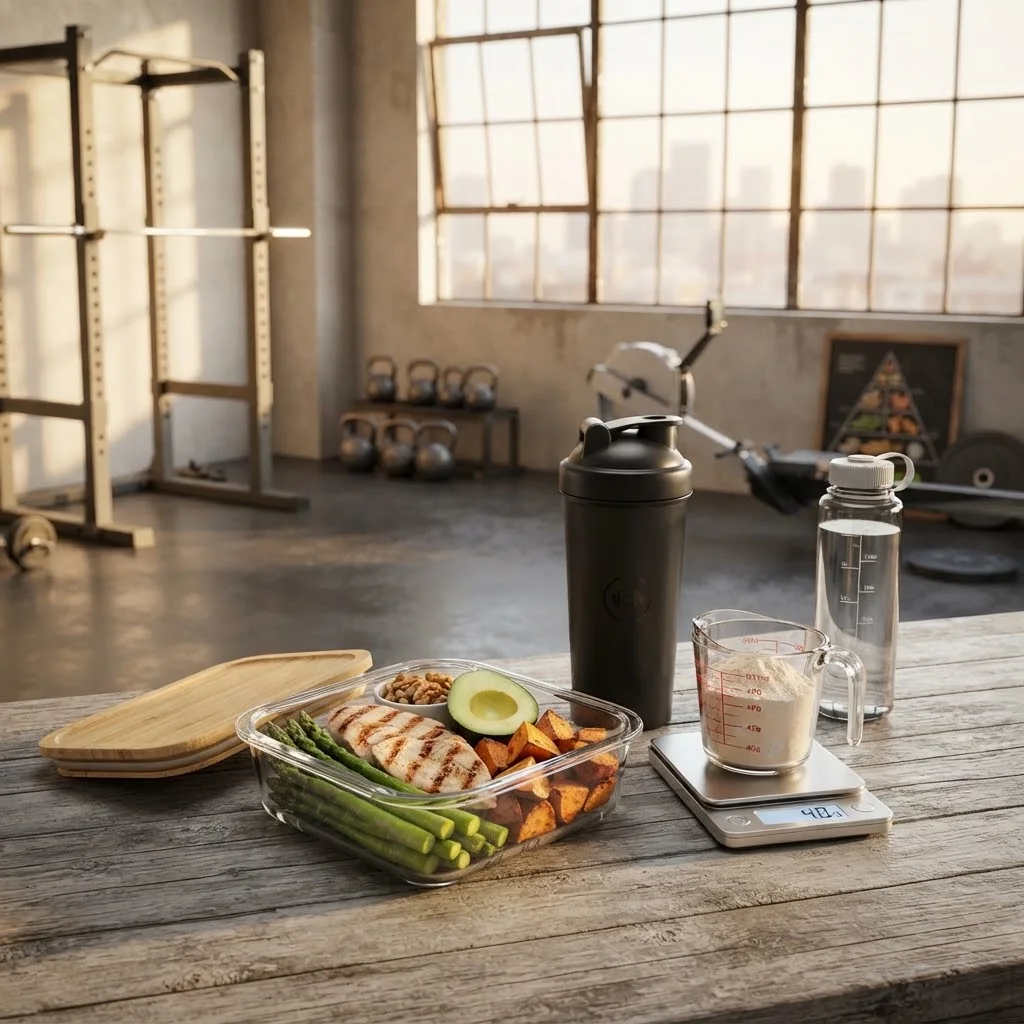
How Much Protein Should You Eat During a Cut? is an important nutrition-planning question. The useful answer depends on body composition, training history, goals, sleep, and the ability to stay consistent, so personal trends matter more than an extreme universal rule.
The short answer
For many resistance-trained people, roughly 1.6–2.2 g of protein per kilogram of body weight per day is a practical starting range. Leaner, more experienced athletes or those using a larger deficit may benefit from the upper end.
What matters most
Treat the number as a range, not a universal prescription. Body size, leanness, deficit severity, age, training volume, and experience influence the useful target.
Spread protein over three to five meals. For an 80 kg person, 1.6–2.2 g/kg equals 128–176 g daily; meal distribution makes that target easier to reach.
More protein does not replace calorie control. Protein still provides energy, and extreme intakes can crowd out carbohydrate, essential fats, and dietary variety.
Food should form the base; protein powder is a convenience. Kidney disease, pregnancy, or relevant medical conditions require individualized guidance.
How to apply it
- Multiply body weight by 1.6 for an initial lower target
- Divide the result across 3–5 meals
- Track actual intake for one week
- Adjust using hunger, training, and body trends
Common mistakes
- Changing several variables at once and losing the cause of the result
- Reacting to one weigh-in instead of a weekly average
- Using supplements instead of correcting food and training
- Ignoring sleep, stress, and long-term adherence
Bottom line
A useful plan is measurable and sustainable. Make one small change, allow enough time for a trend to appear, then decide using weight, waist, performance, hunger, and recovery.
References
- ISSN Position Stand — Protein and exercise — https://pubmed.ncbi.nlm.nih.gov/28642676/
- Systematic review — Protein during caloric restriction in resistance-trained lean athletes — https://pubmed.ncbi.nlm.nih.gov/24092765/