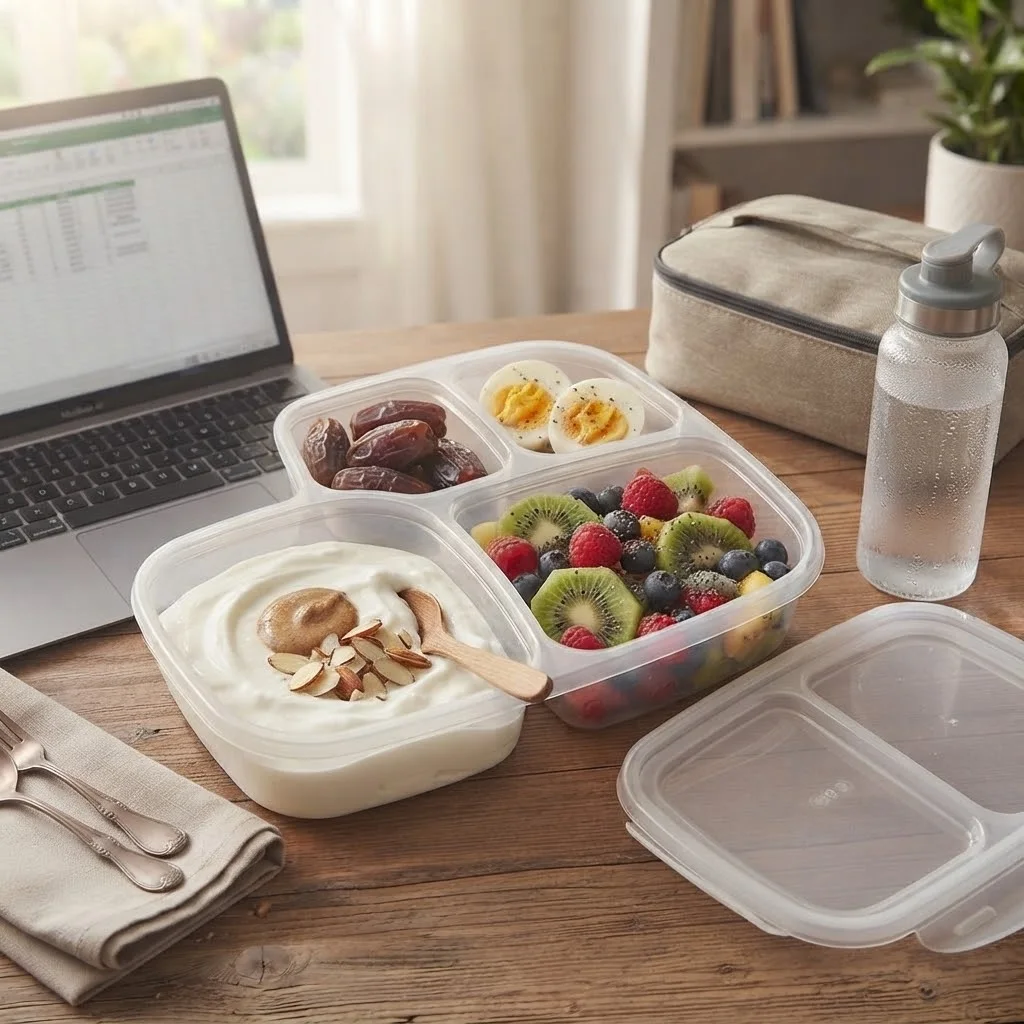
The main workplace problem is usually not a lack of options but a lack of preparation. Once hunger becomes intense, the nearest pastry or fast food often wins. A prepared protein-rich snack can bridge meals and simplify the daily target. Choose according to refrigeration, smell, time available, and calorie goals.
The short answer
Portable foods and simple planning make it possible to eat enough protein at work without relying on shakes and packaged bars every day.
Refrigerated options
Greek yogurt, milk, cottage cheese, boiled eggs, chicken or tuna sandwiches, and a small container of home-cooked food work well. Keep them refrigerated or use an insulated bag with ice packs. Do not leave protein-rich perishable foods at room temperature for hours, especially in warm weather.
Shelf-stable options
An unopened tuna pouch, shelf-stable UHT milk, dry whey carried in a shaker, roasted chickpeas, and selected protein bars can work. Check actual protein and calories in bars because some are closer to candy with only a small protein contribution.
How much is useful?
A snack does not always need 40 g of protein. Depending on the rest of the day, roughly 15–30 g can bridge meals effectively. During fat loss, monitor the accompanying calories. Nuts are nutritious, but they are not especially protein dense relative to their energy content.
A five-minute plan
Choose three options at the start of the week, assign them to workdays, and keep one emergency shelf-stable choice in a drawer. For example: yogurt and fruit twice, chicken sandwiches twice, and milk plus whey once. Simple rotation reduces food boredom and last-minute decisions.
Practical checklist
- Match portion size to calorie goals and training volume.
- Test unfamiliar food on an ordinary day first.
- Individualize general advice when a medical condition is present.
Bottom line
A useful plan meets daily needs and remains repeatable for weeks and months. One meal cannot repair an inadequate diet, and one imperfect choice does not erase the results of a consistent pattern.
References
- ISSN Position Stand: Protein and Exercise — https://pubmed.ncbi.nlm.nih.gov/28642676/
- Nutrition and Athletic Performance — Academy of Nutrition and Dietetics, Dietitians of Canada and ACSM — https://pubmed.ncbi.nlm.nih.gov/26920240/