Bodybuilding nutrition does not need to begin with an extreme meal plan, a ban on rice, or a shelf full of supplements. A better starting point is to define the outcome you want, understand what you currently eat, and build a few habits you can repeat. When the foundations are weak, small details such as the exact minute you drink a shake rarely rescue the plan.
The short answer
Clarify your goal, observe body-weight trends for about two weeks, eat enough protein, base most meals on minimally processed foods, and adjust portions according to real results. You do not need to change everything at once.
1. Choose a specific goal
“Getting in shape” is difficult to plan for. Decide whether your current priority is gaining muscle, losing fat, maintaining weight, or attempting body recomposition. Muscle gain usually calls for progressive training and a slow upward weight trend. Fat loss requires a manageable calorie deficit while keeping resistance training and protein in place. Recomposition is often most realistic for beginners, people returning after a layoff, or those starting with more body fat.
2. Measure your current baseline
Record your normal meals for three to seven days without trying to make them look perfect. Weigh yourself on several mornings under similar conditions and use a weekly average. A single weigh-in can move because of water, sodium, carbohydrate intake, sleep, or digestion.
Also track waist measurement, gym performance, hunger, sleep, and daytime energy. These signals show whether the plan is helping your life and training, not just changing a number on the scale.
3. Build simple meals
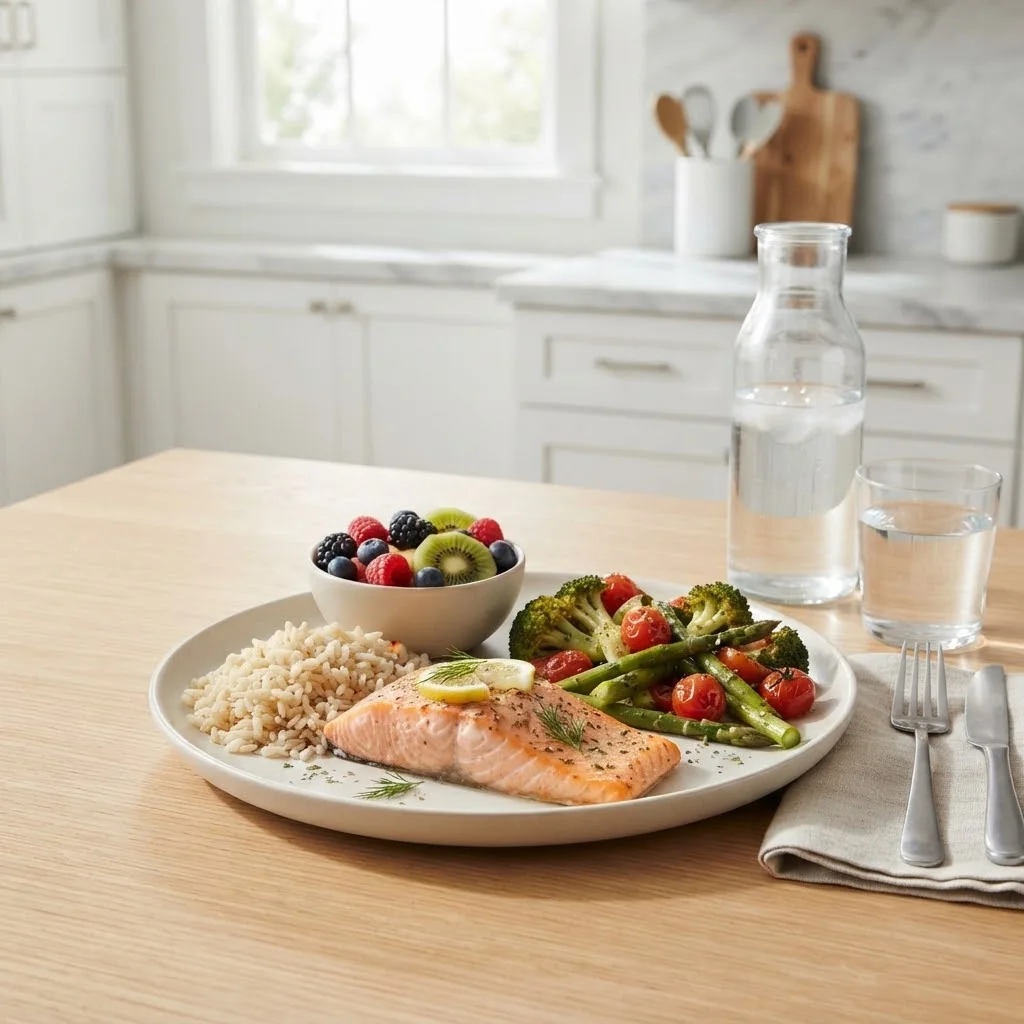
Most main meals can include a protein source, a carbohydrate source, fruit or vegetables, and an appropriate amount of fat. Poultry, fish, eggs, dairy, legumes, tofu, and soy foods can provide protein. Rice, bread, potatoes, oats, fruit, and beans are practical carbohydrate choices. Nuts, seeds, olive oil, avocado, and oily fish contribute dietary fat.
Avoid treating foods as morally “clean” or “dirty.” The overall pattern matters. A favorite dessert does not ruin an otherwise useful diet, and one salad does not repair a consistently poor pattern.
4. Distribute protein across the day
For most people who exercise, roughly 1.4–2.0 grams of protein per kilogram of body weight per day is a useful evidence-based range. A 75 kg lifter might begin around 120–150 grams per day and divide it over three to five meals. People with kidney disease or another relevant medical condition should obtain individualized advice rather than copying a general target.
5. Adjust calories from trends
Calorie calculators provide estimates, not verdicts. If fat loss is the goal and both average weight and waist remain unchanged for several weeks, a small reduction in intake or a little more daily activity may help. If muscle gain is the goal but body weight, measurements, and performance have all stalled, a modest calorie increase is usually more sensible than a huge surplus.
A practical first week
Write your primary goal in one sentence.
Record three normal eating days.
Choose a clear protein source for each main meal.
Bring water, fruit, and vegetables to a repeatable level.
Record weekly average weight and waist.
Change only one or two variables.
Review the result after two weeks.
Common mistakes
Starting with restrictions that cannot last
Using supplements to replace an incomplete diet
Under-eating on training days and overeating all weekend
Reacting to one day of scale weight
Ignoring sleep, hydration, and training quality
Bottom line
Bodybuilding nutrition begins with a clear goal, measurable habits, adequate protein, and calm review. A plan you can follow for months will outperform a “perfect” plan that survives for only a few days.
References
ACSM — Ten Things You Need to Know About Sports Nutrition — https://acsm.org/ten-sports-nutrition-facts/
NIDDK — Maintaining a Healthy Weight — https://www.niddk.nih.gov/health-information/weight-management/keeping-a-healthy-weight
ISSN Position Stand: Protein and Exercise — https://pubmed.ncbi.nlm.nih.gov/28642676/