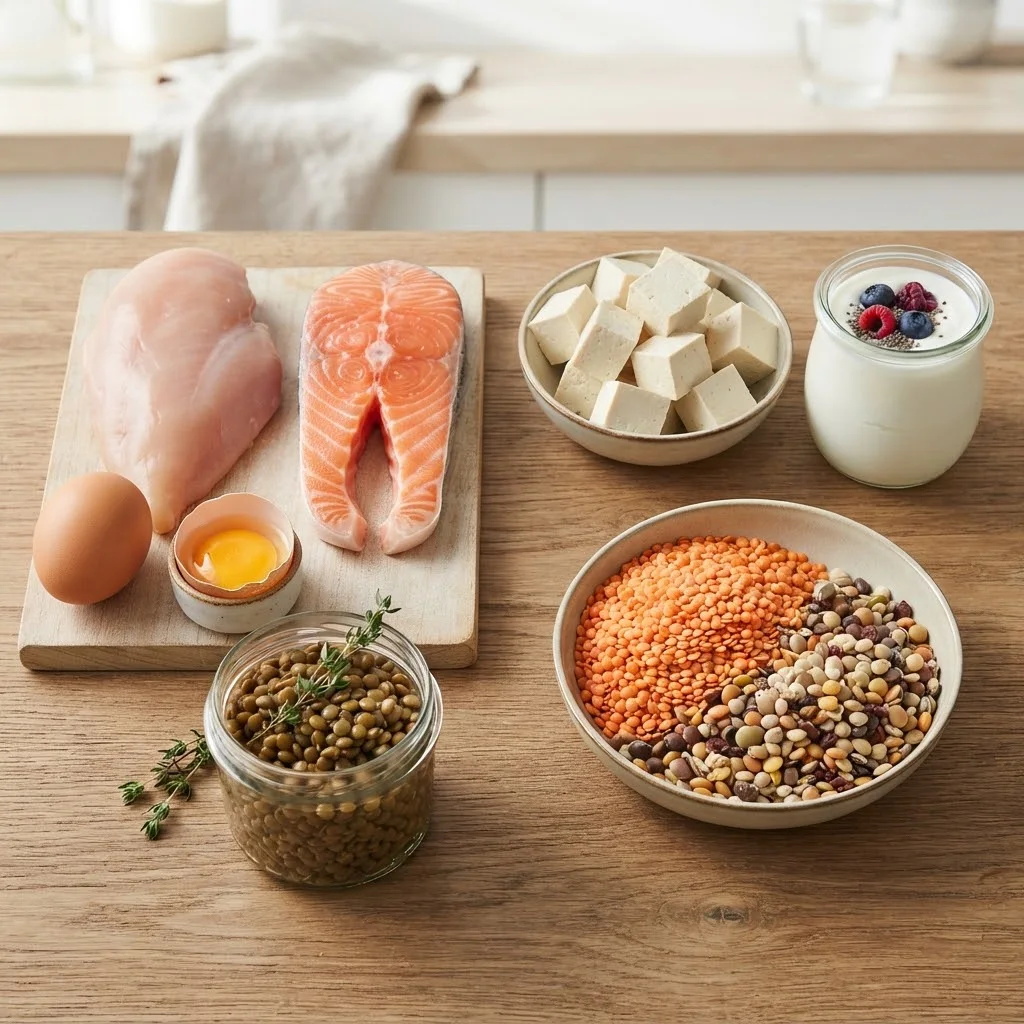
There is no single best protein food. Chicken breast is lean and protein dense, Greek yogurt is convenient, eggs are versatile and nutrient rich, and lentils add fiber alongside protein. The best choices fit your budget, preferences, goals, and digestion.
The short answer
For most main meals, choose a serving that provides roughly 20–40 g of protein. Poultry, fish, lean meat, eggs, high-protein dairy, soy, tofu, and legumes are practical staples.
Practical animal sources
Skinless poultry, fish, lean meat, eggs, milk, Greek yogurt, and cheeses that fit the calorie target are reliable choices. Cooking method and added fat can substantially change the final energy content.
Strong plant sources
Soy, tofu, tempeh, lentils, beans, chickpeas, and foods made from them are strong foundations. Nuts and seeds contain protein, but they are primarily fat-dense foods and deliver many calories before reaching a large protein dose.
How to simplify selection
Choose three to five staples that are usually available. Keep two fast options for busy days, such as high-protein yogurt, boiled eggs, lower-sodium canned fish, or prepared lentils. Weekly variety also improves micronutrient coverage.
Practical tips
Read labels by protein per serving, not only per 100 g.
Leaner sources make calorie control easier during a cut.
Use meaningful portions of legumes or soy in plant-based meals.
Bottom line
Numbers are starting points, not verdicts. The right choice must fit goals, calories, training quality, digestion, and real trends. Make small changes and assess them over several weeks.
References
ISSN Position Stand: Protein and Exercise — https://pubmed.ncbi.nlm.nih.gov/28642676/
National Academies — Dietary Reference Intakes for Macronutrients — https://www.nationalacademies.org/read/10490