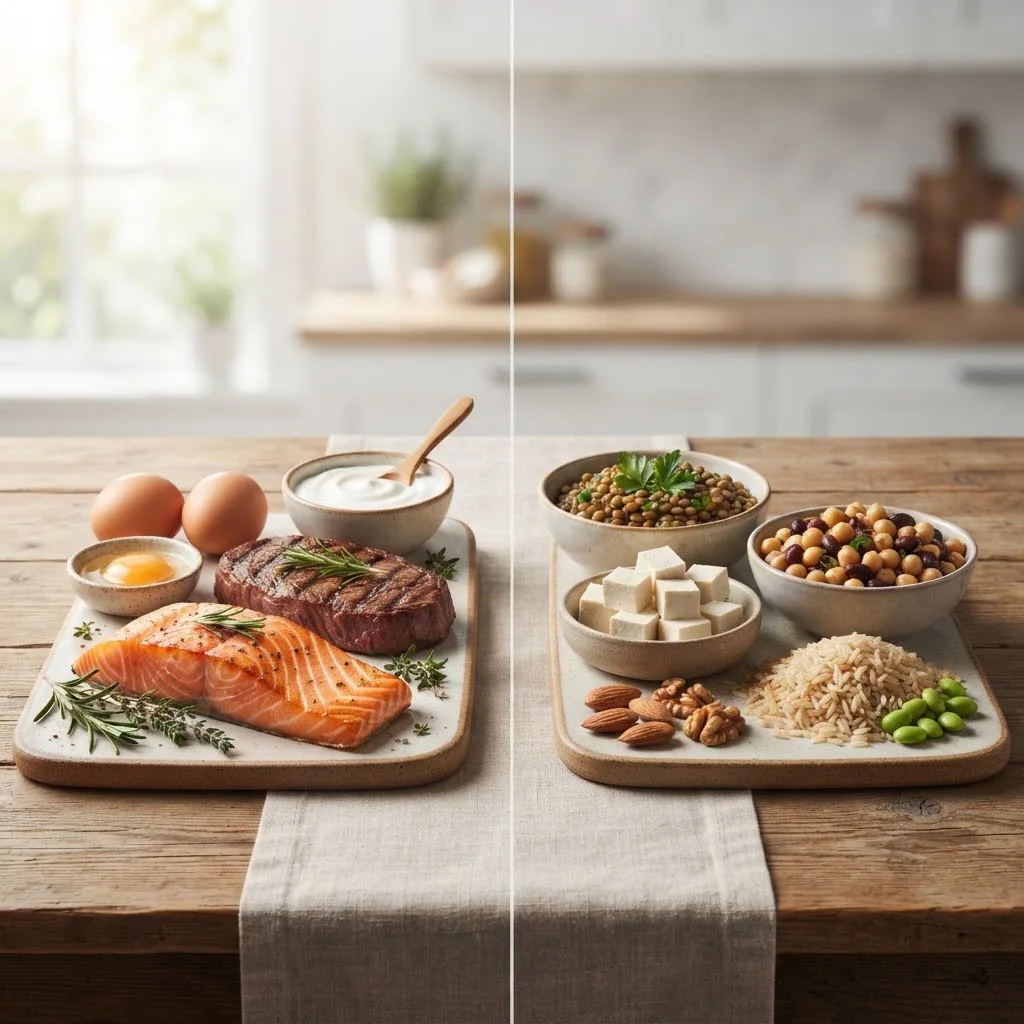
The answer is not that one category is always superior. Animal proteins often provide essential amino acids in a concentrated, highly digestible form, but a well-planned plant-based pattern can also meet an athlete’s needs. Total intake, variety, and diet quality matter most.
The short answer
Both can support muscle gain. Predominantly plant-based diets benefit from greater variety, a slightly more generous total target, and regular use of protein-rich foods such as soy, tofu, legumes, and combinations of grains and pulses.
What does protein quality mean?
Quality reflects essential amino-acid content and digestibility. Leucine is particularly relevant to signaling muscle protein synthesis. Dairy, eggs, meat, fish, and soy commonly have strong profiles; legumes remain valuable but may be relatively lower in one amino acid.
Must plant proteins be combined at every meal?
No. When the daily diet is varied, rice and beans do not need to appear in the same bite. Eating grains, legumes, nuts, seeds, and soy across the day creates a more complementary amino-acid pattern.
The better choice depends on the whole diet
An animal food may be protein dense but also high in saturated fat or sodium. A plant food may add fiber and micronutrients yet require a larger portion to reach the same protein dose. Compare real foods and the total dietary pattern rather than labels alone.
Practical tips
Give each main meal a clear protein anchor.
In plant-based diets, eat meaningful portions of soy and legumes rather than treating them as garnish.
Keep protein sources varied across the week.
Bottom line
Numbers are starting points, not verdicts. The right choice must fit goals, calories, training quality, digestion, and real trends. Make small changes and assess them over several weeks.
References
ISSN Position Stand: Protein and Exercise — https://pubmed.ncbi.nlm.nih.gov/28642676/
National Academies — Dietary Reference Intakes for Macronutrients — https://www.nationalacademies.org/read/10490