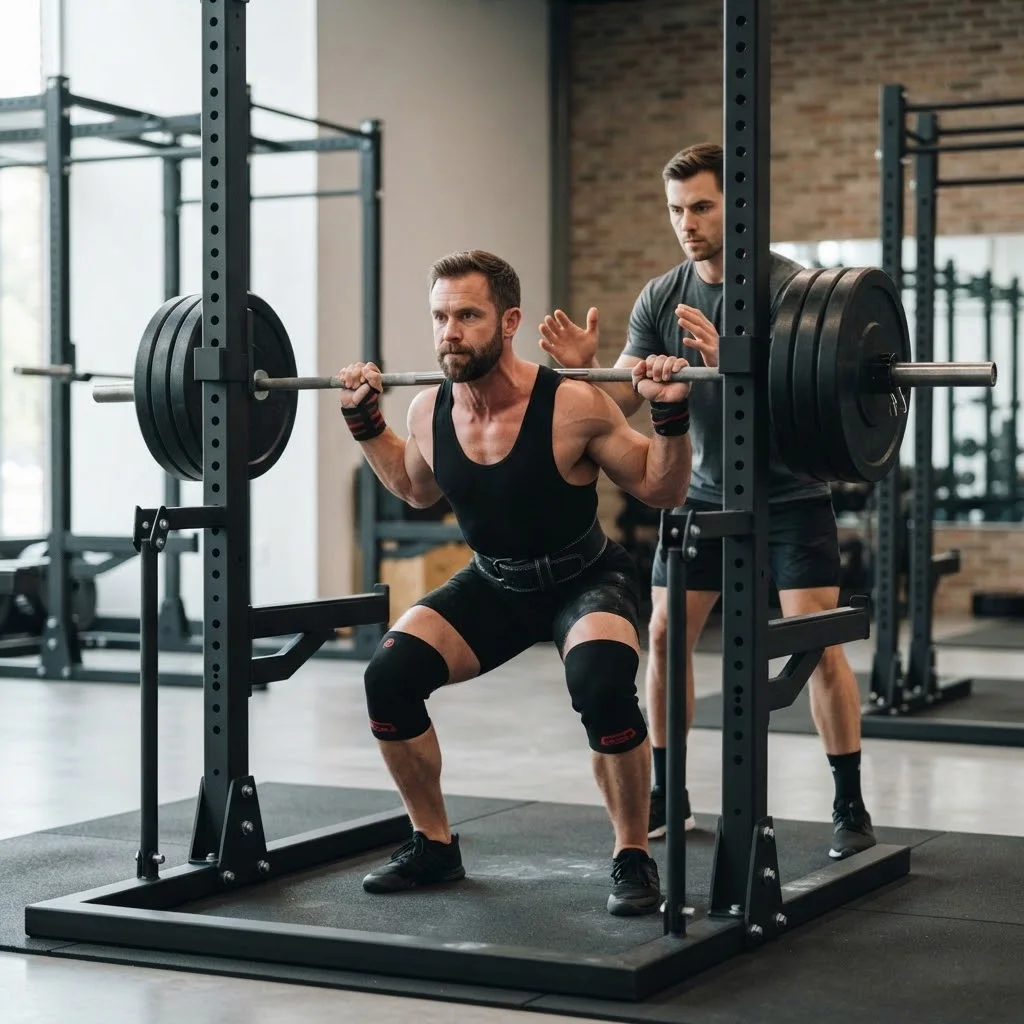
Strength can be assessed in several ways, but the one-repetition maximum is among the most common resistance-training measures. Comparisons are meaningful only when exercise, range, pause, equipment, and technical standard remain consistent.
The short answer
One-repetition maximum is the heaviest load you can complete for one full, valid repetition. Strength can be assessed with a direct 1RM test, an estimate from a submaximal repetition set, or consistent repetition records. Direct testing is generally reliable for healthy, experienced lifters when warm-up and safety are appropriate; beginners can use submaximal estimates.
Understanding the method
A 1RM belongs to the specific exercise. A barbell bench-press result does not equal a dumbbell or machine press maximum. Grip width, squat depth, belt use, and setup can change the result, so record test conditions.
For a direct test, complete a general warm-up and several low-repetition ramp-up sets. Perform single attempts with small load increases and rest roughly three to five minutes between heavy attempts. When a repetition no longer meets the standard, the previous successful lift is the valid result.
Estimated 1RM uses the load and repetitions from a reasonably heavy submaximal set. Shorter sets around three to five repetitions are usually more useful for estimation than 15–20-repetition sets, which carry more individual error.
The relationship between percentage of 1RM and possible repetitions varies. Exercise type, experience, muscle characteristics, and fatigue tolerance matter. Percentage tables are starting points, not promises that 80% always produces a fixed number of repetitions.
Maximal testing is not automatic when pain, dizziness, uncontrolled illness, cardiac history, or a medical restriction is present. Submaximal sets can track progress, and professional assessment may be appropriate.
| Method | Advantage | Limitation | Useful for |
|---|---|---|---|
| Direct 1RM | Measures actual maximal strength | Fatiguing; requires skill and safety | Experienced lifters and standardized lifts |
| 3–5-rep estimate | Less demanding and simpler | Formula and individual error | Most gym users |
| Repetition record | Practical and lower risk | Does not directly measure 1RM | Beginners and routine tracking |
Practical guide
- Define the exercise and exact repetition standard.
- Keep sleep, nutrition, and previous-day training reasonably normal.
- Use progressive warm-up sets without creating fatigue.
- For direct testing, use safeties, collars, or a competent spotter.
- Record the result, body mass, equipment, and ideally a video for later comparison.
Common mistakes
- Large load jumps after an inadequate warm-up
- Accepting a partial or assisted repetition as a record
- Testing too many heavy lifts in one session
- Comparing results produced with different range or equipment
Frequently asked questions
How often should 1RM be tested?
Most recreational lifters do not need frequent maximal tests. Testing after a strength block or every few months is often enough; estimated 1RM and repetition records can track the periods between.
Is an estimation formula exact?
No. Formula error varies by exercise and person. Use one consistent formula with shorter sets and focus on the trend rather than a falsely precise number.
Bottom line
A 1RM is useful for maximal-strength assessment, but it is not the only progress marker. If direct testing does not fit your goal, experience, or condition, short-set estimates and repetition records provide useful, safer information.
References
- Systematic review — Test-retest reliability of the one-repetition maximum — https://pubmed.ncbi.nlm.nih.gov/32681399/
- Meta-regression — Repetitions possible at percentages of 1RM — https://pubmed.ncbi.nlm.nih.gov/37792272/
- ACSM Position Stand — Resistance Training Prescription for Healthy Adults — https://pubmed.ncbi.nlm.nih.gov/41843416/