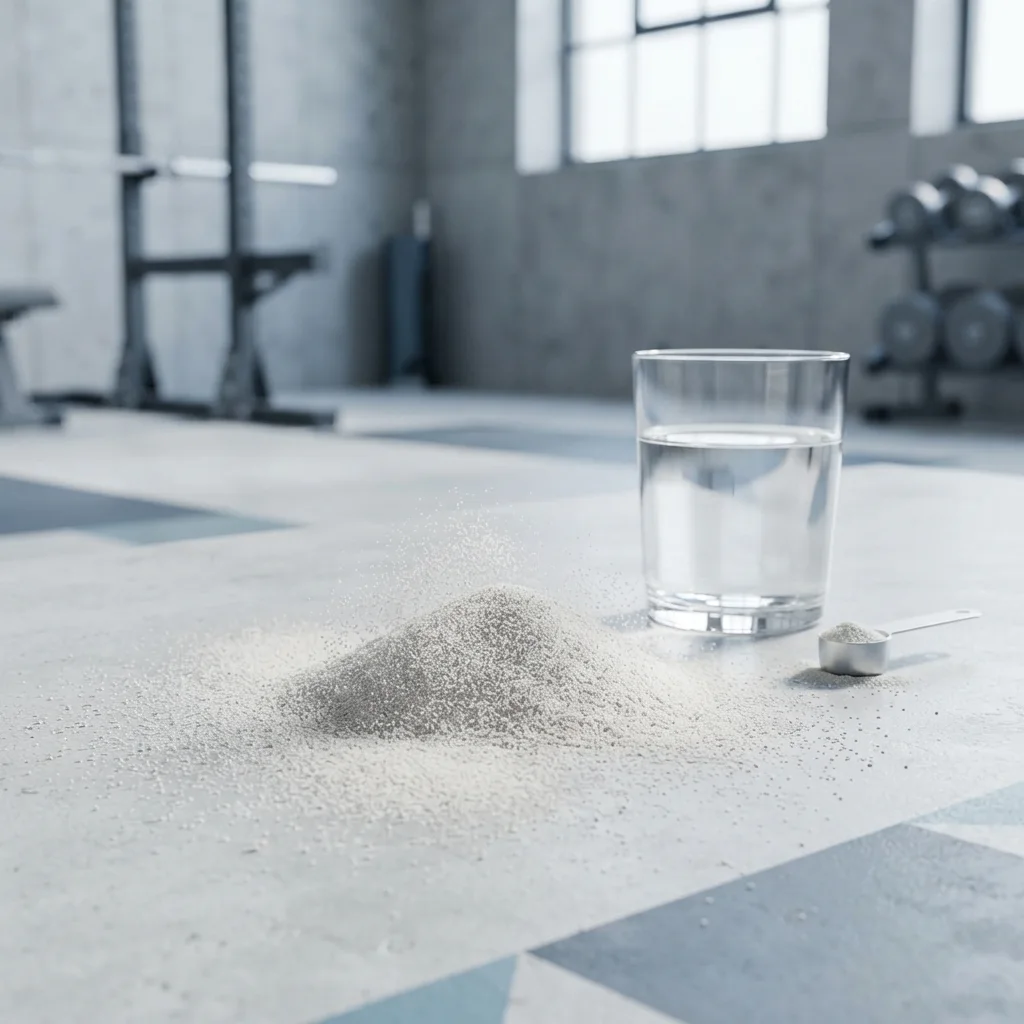
Micronization is a physical process, not a new molecule. It reduces powder particle size. Greater surface area can improve dispersion and reduce gritty texture, but the body ultimately absorbs creatine, not the visible size of powder grains.
Quick answer
If the label says micronized creatine monohydrate, the active ingredient is still monohydrate. The likely advantage is mixing convenience and texture; evidence does not show that an equal dose produces greater absorption, strength, or muscle than standard monohydrate. It is reasonable at a similar price if mixing matters, but it is not required for results.
What matters
- Smaller particles do not increase creatine per gram. Always read the active amount per serving.
- Complete dissolution is not required for effect; suspended particles still enter the digestive tract.
- Do not leave powder for long periods in a warm acidic drink; mix reasonably close to consumption.
- If it costs more, weigh the price against genuine convenience rather than claims of more muscle.
- Micronization does not replace purity, proper storage, or third-party testing.
A practical approach
- Confirm monohydrate on the label.
- Compare active amount with standard powder.
- Calculate cost per 5 g.
- Assess mixing and personal tolerance.
- Choose for convenience, not superiority claims.
Frequently asked questions
Does micronized creatine work faster?
Store elevation depends on total intake and consistency; a meaningful speed advantage is not established.
Is it easier on the stomach?
Improved texture may feel better for some, but better tolerance is not guaranteed.
References
- Creatine and Creatine Forms Intended for Sports Nutrition — https://pubmed.ncbi.nlm.nih.gov/28019093/
- ISSN Position Stand: Safety and Efficacy of Creatine Supplementation — https://pubmed.ncbi.nlm.nih.gov/28615996/
- Common Questions and Misconceptions About Creatine Supplementation — https://pubmed.ncbi.nlm.nih.gov/33557850/