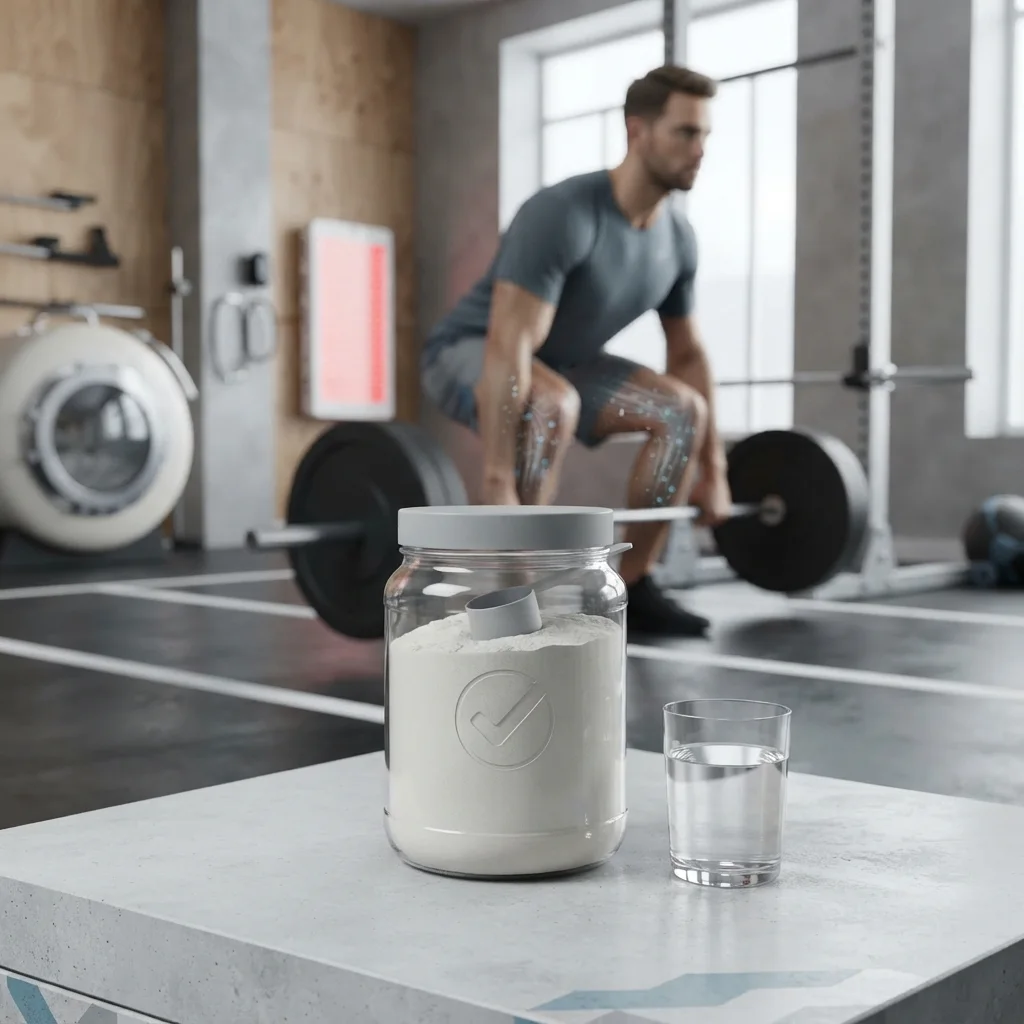
Monohydrate means each creatine molecule in the crystal is associated with one water molecule; it does not mean it “waters down” the body. Simplicity, cost, and extensive research make it the benchmark for newer forms.
Quick answer
Creatine monohydrate has strong evidence for increasing muscle creatine stores, improving repeated high-intensity capacity, and supporting resistance-training adaptations. For most healthy adults, plain powder at a consistent daily dose is the logical first choice; paying more for a complex form requires a credible, relevant advantage.
What matters
- A common maintenance dose is 3–5 g/day. Loading around 20 g/day in divided doses for 5–7 days is optional and only speeds saturation.
- Incomplete mixing in cold water does not prove poor absorption or counterfeit. More fluid, appropriate temperature, and drinking soon after mixing can help.
- Timing is secondary. Take it with a meal or whenever adherence is easiest, including rest days.
- A single-ingredient product is easier to assess. Read creatine amount, serving size, additives, and independent testing.
- A large single dose can cause gastrointestinal discomfort; divided doses or skipping loading can improve tolerance.
A practical approach
- Buy single-ingredient monohydrate.
- Check amount per serving.
- Choose a simple daily routine.
- Split doses if loading.
- Track performance and tolerance.
Frequently asked questions
Must it be cycled?
Evidence does not require routine cycling in healthy people; individual medical advice takes priority.
With water or food?
Either can work. Choose the method that is comfortable and sustainable.
References
- ISSN Position Stand: Safety and Efficacy of Creatine Supplementation — https://pubmed.ncbi.nlm.nih.gov/28615996/
- NIH Office of Dietary Supplements — Exercise and Athletic Performance Supplements — https://ods.od.nih.gov/factsheets/ExerciseAndAthleticPerformance-HealthProfessional/
- Common Questions and Misconceptions About Creatine Supplementation — https://pubmed.ncbi.nlm.nih.gov/33557850/