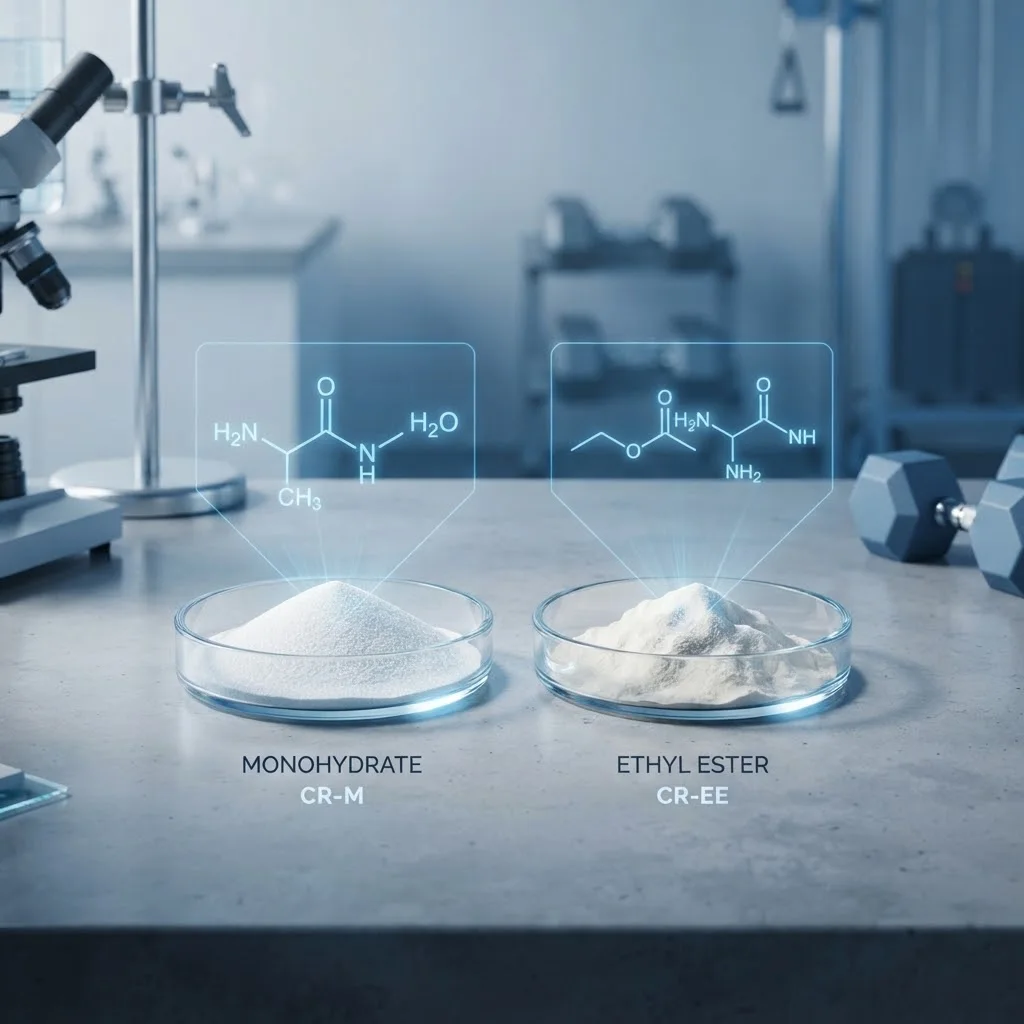
Adding an ethyl group was proposed to improve creatine transport and absorption. The chemistry sounded attractive, but it needed confirmation through muscle storage and performance in humans.
Quick answer
In a direct resistance-training comparison, ethyl ester was not better for muscle creatine, body composition, strength, or power and raised blood creatinine more. It is therefore not an evidence-based first choice.
What matters
- Higher creatinine alone does not prove kidney injury, but indicates greater conversion.
- Chemical modification does not guarantee bioavailability.
- Comparative evidence outweighs package claims.
- Report creatine use before blood tests.
- Monohydrate is cheaper and more predictable.
A practical approach
- Separate claims from outcomes.
- Read direct comparisons.
- Compare dose and cost.
- Benchmark against monohydrate.
- Do not switch without reason.
Frequently asked questions
Is a lower dose stronger?
Evidence does not support that claim.
Does bitterness prove effect?
No; taste is not efficacy or purity.
References
- Creatine Ethyl Ester vs Monohydrate During Resistance Training — https://pubmed.ncbi.nlm.nih.gov/19228401/
- Creatine and Creatine Forms Intended for Sports Nutrition — https://pubmed.ncbi.nlm.nih.gov/28019093/
- ISSN Position Stand: Safety and Efficacy of Creatine Supplementation — https://pubmed.ncbi.nlm.nih.gov/28615996/