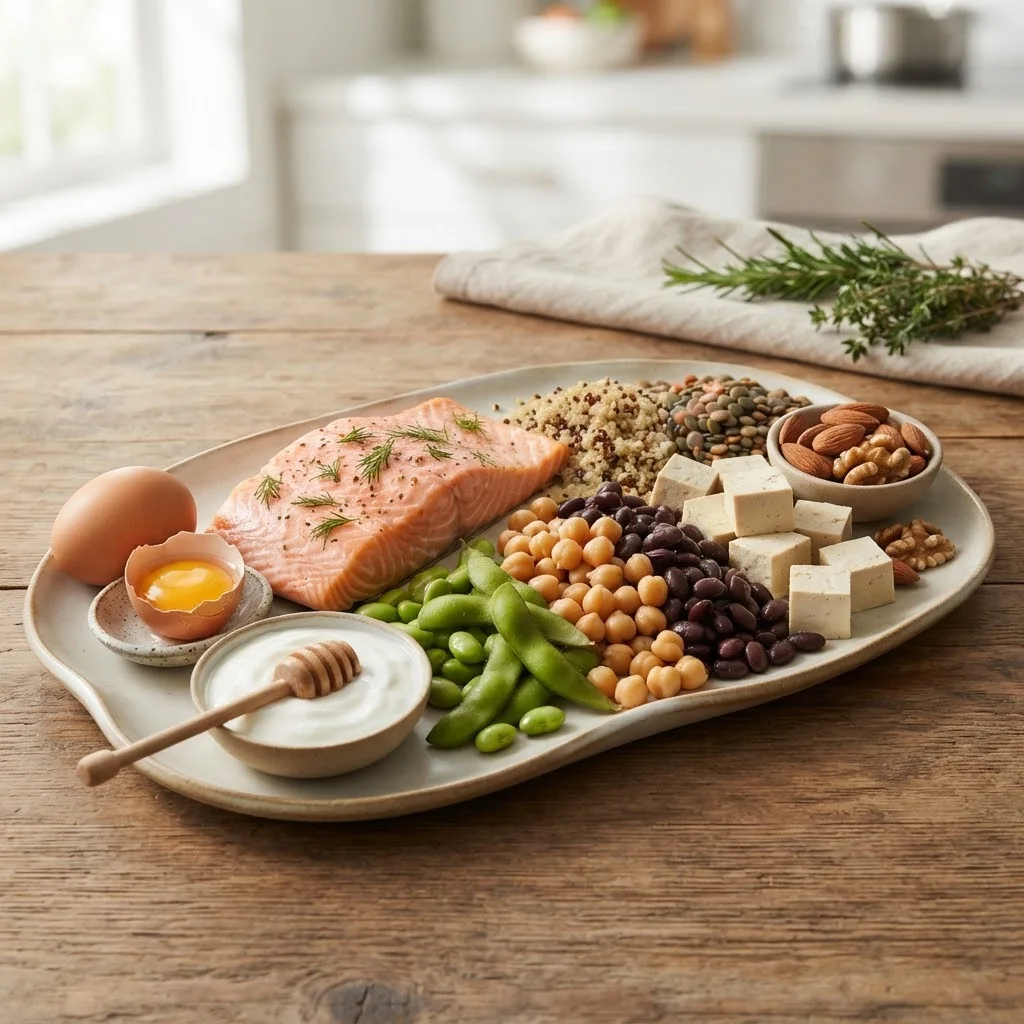
A complete protein provides all nine essential amino acids in adequate proportions. “Essential” means the body cannot make enough of them and must obtain them from food. The term is useful, but it should not be used to dismiss plant foods.
The short answer
Eggs, dairy, meat, fish, and soy are common complete proteins. Many plant proteins are relatively lower in one or more amino acids, but a varied daily diet can complement those differences.
What are amino acids?
Amino acids are the building blocks of protein. They are used to build and repair tissue, enzymes, transport proteins, and many other compounds. Protein quality is therefore influenced by amino-acid pattern and digestibility, not just grams on a label.
Complementary proteins
Grains are often relatively lower in lysine, while legumes can be relatively lower in methionine. Foods such as bread with lentils, rice with beans, or hummus with bread can complement each other across the day. Exact pairing at every meal is unnecessary.
What matters more for athletes?
Total daily protein, distribution across meals, and adequate energy matter more than making every bite “complete.” A clear protein serving at each meal plus variety across the day is a practical strategy.
Practical tips
Soy, quinoa, and buckwheat have useful plant-protein profiles.
Include both legumes and grains through the week.
Consider quality without forgetting total intake.
Bottom line
Numbers are starting points, not verdicts. The right choice must fit goals, calories, training quality, digestion, and real trends. Make small changes and assess them over several weeks.
References
National Academies — Dietary Reference Intakes for Macronutrients — https://www.nationalacademies.org/read/10490
ISSN Position Stand: Protein and Exercise — https://pubmed.ncbi.nlm.nih.gov/28642676/