What Is Progressive Overload and How Do You Apply It? is an important question, but there is no universal number. Training history, goals, schedule, recovery capacity, and exercise quality all matter.
The short answer
Progressive overload means gradually increasing training demands as the body adapts. It is not only heavier weight; more repetitions with the same load, productive sets, better range of motion, or more controlled technique can also show progress.
What matters most
A simple double-progression method uses a range such as 8–12 repetitions. Once every set reaches the top with good form, add a small amount of weight.
Increases should be small. Large jumps may shorten range and reduce control, potentially lowering the target muscle’s actual stimulus.
Progress is not always linear. Sleep, stress, dieting, and training age mean that maintaining performance can be a good result in some weeks.
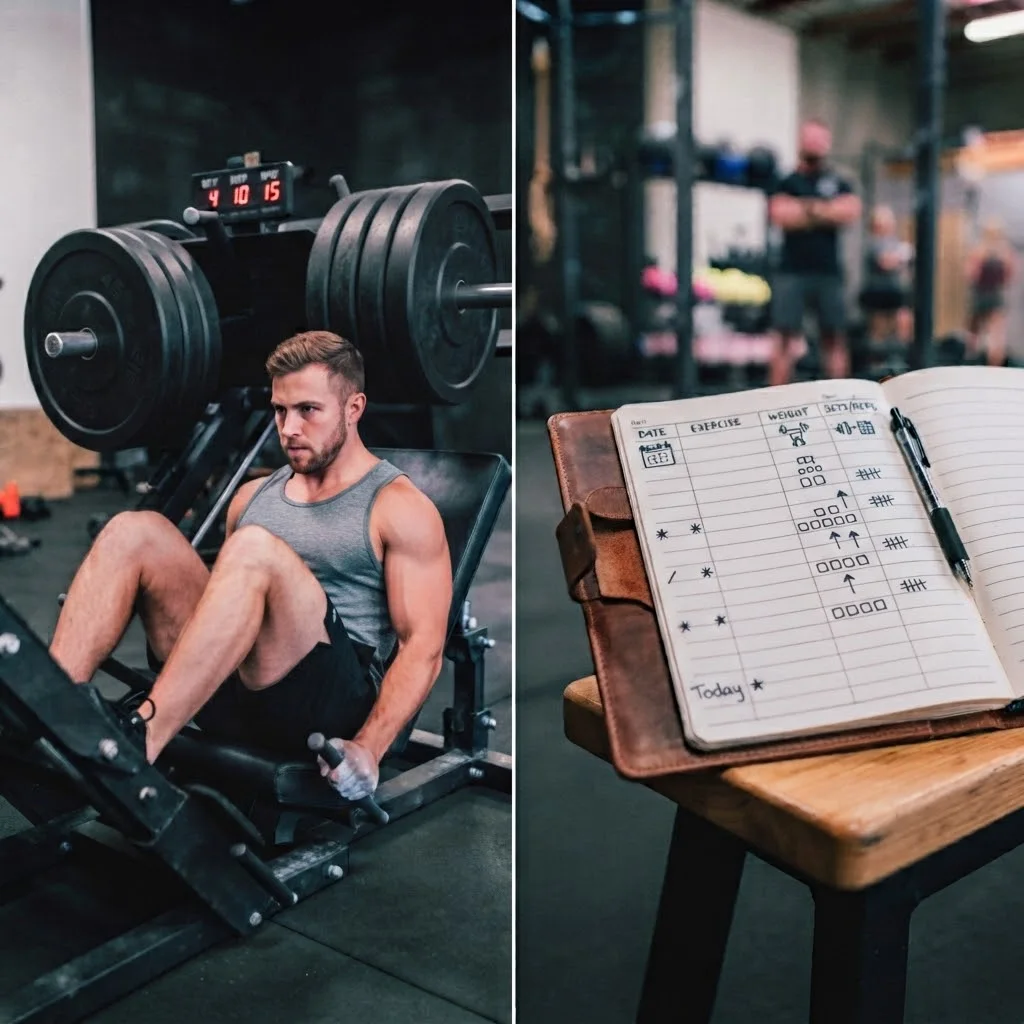
A training log is essential. Without load, repetitions, sets, and RIR, you cannot distinguish true progress from a different workout.
How to apply it
- Set a repetition range for each exercise
- Log load and repetitions for every set
- Increase repetitions first
- After reaching the top, add roughly 2–5% load
Common mistakes
- Copying a program designed for a different person
- Increasing load, sets, and training days all at once
- Sacrificing range and control for a bigger number
- Changing the plan before enough data are collected
Bottom line
The best program is one you can repeat, record, and adjust from results. Start with a manageable dose and add work only while technique, performance, and recovery remain acceptable.
References
- BJSM — Resistance training prescription for strength and hypertrophy — https://bjsm.bmj.com/content/57/18/1211
- Systematic review and meta-analysis — Weekly training volume and muscle mass — https://pubmed.ncbi.nlm.nih.gov/27433992/