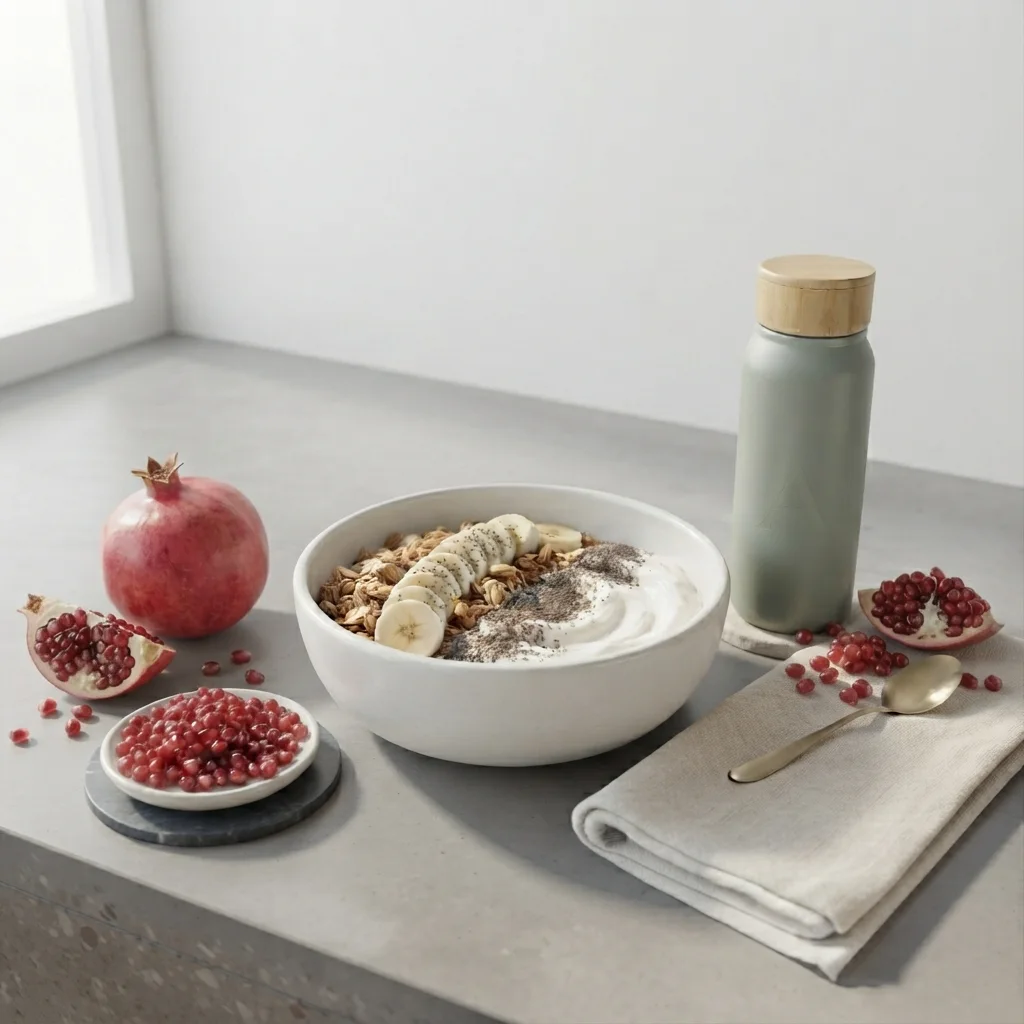
Raw pomegranate arils can fit an athlete’s diet, but no fruit builds muscle or melts fat on its own. Its role is to provide some carbohydrate, water, fiber, and micronutrients. Results still depend on total daily energy and protein, training quality, sleep, and consistency.
Nutrition per 100 g raw
The table refers to 100 g of the raw edible portion of raw pomegranate arils. A usual serving may weigh less or more, and variety, ripeness, and the data source can cause small differences.
| Nutrient | Amount |
|---|---|
| Energy | 83 kcal |
| Protein | 1.67 g |
| Carbohydrate | 18.7 g |
| Fat | 1.17 g |
| Fiber | 4.0 g |
| Sugar | 13.67 g |
| Potassium | 236 mg |
Is it suitable before training?
A small serving can provide convenient carbohydrate when training is approaching. Digestive tolerance differs, so avoid a very large portion, an unusually fiber-heavy combination, or an unfamiliar food immediately before hard training or competition.
How to use it after training
Fruit can help replace some carbohydrate and fluid, but it does not provide enough protein for a complete recovery meal. Pair it with Greek yogurt, milk, eggs, or a meal containing poultry, fish, legumes, or soy.
During cutting and gaining
During a cut, count the serving within calories and prefer whole fruit over juice for easier portion control and more fiber. During a gaining phase, combine it with oats, dairy, or a main meal; weight gain still comes from the overall energy surplus.
What is distinctive about this fruit
The table is for edible pomegranate arils, not the whole fruit with peel or pomegranate juice. Juicing reduces fiber and makes large amounts easier to consume; whole arils offer clearer portion control.
Should you worry about fruit sugar?
Sugar in whole fruit comes with water, fiber, and nutrients and is not equivalent to added sugar. Most healthy people do not need to avoid fruit because of natural sugar alone. People with diabetes should individualize the serving around medication and glucose response.
Bottom line
Raw pomegranate arils is a food choice, not a muscle-building supplement. Set the portion according to calorie goals, training timing, and stomach comfort, and include it alongside protein foods and a varied whole-food diet.
References
- USDA FoodData Central — https://fdc.nal.usda.gov/
- WHO — Healthy Diet — https://www.who.int/news-room/fact-sheets/detail/healthy-diet
- Nutrition and Athletic Performance — Academy of Nutrition and Dietetics, Dietitians of Canada and ACSM — https://pubmed.ncbi.nlm.nih.gov/26920240/