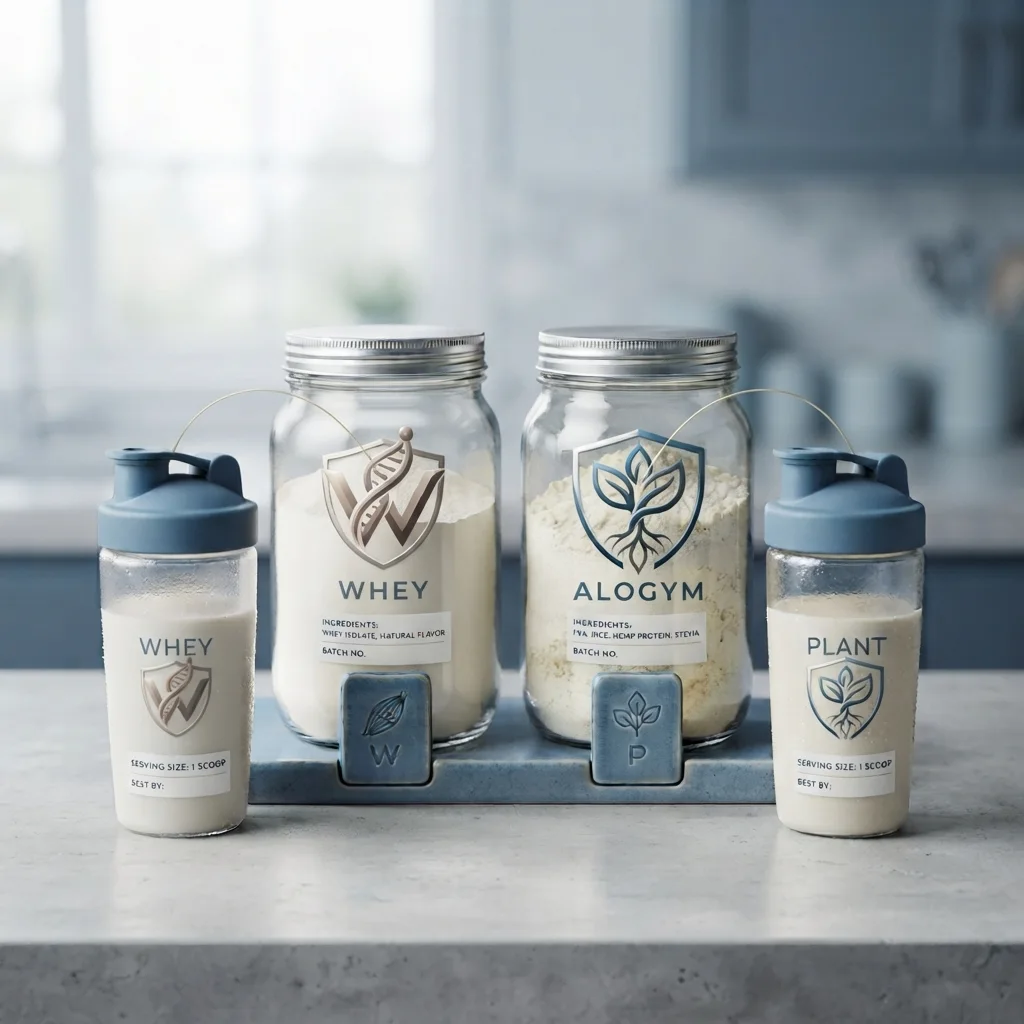
Whey is usually richer in leucine and rapidly digested; plant protein suits vegans and dairy-sensitive people and can work with adequate dose and blending. An informed choice considers diet, relevant testing and the risk of excessive intake.
Quick answer
Differences involve amino-acid profile, digestibility, taste and tolerance. Pea-rice blends or a varied plant diet can complement limiting amino acids. Progressive training and adequate daily protein matter more than the label. A supplement is useful when it addresses a defined need at an appropriate, monitorable dose.
What matters
- Do not diagnose deficiency by guesswork.
- Read the active amount on the label.
- Count food and supplement intake together.
- Higher doses are not always better.
- Medical conditions and medicines need review.
A practical approach
- Review the goal and current diet.
- Use appropriate testing or assessment when needed.
- Choose a simple independently tested product.
- Use an appropriate amount for a defined period.
- Reassess outcomes and adverse effects.
Frequently asked questions
Do athletes always need more?
No; needs depend on sport, diet, sweat losses, health and deficiency.
Can products be combined?
Only after checking overlapping doses and interactions.
References
- Soy and Animal Protein Supplementation with Resistance Training: Meta-Analysis — https://pubmed.ncbi.nlm.nih.gov/29722584/
- ISSN Position Stand: Protein and Exercise — https://pubmed.ncbi.nlm.nih.gov/28642676/