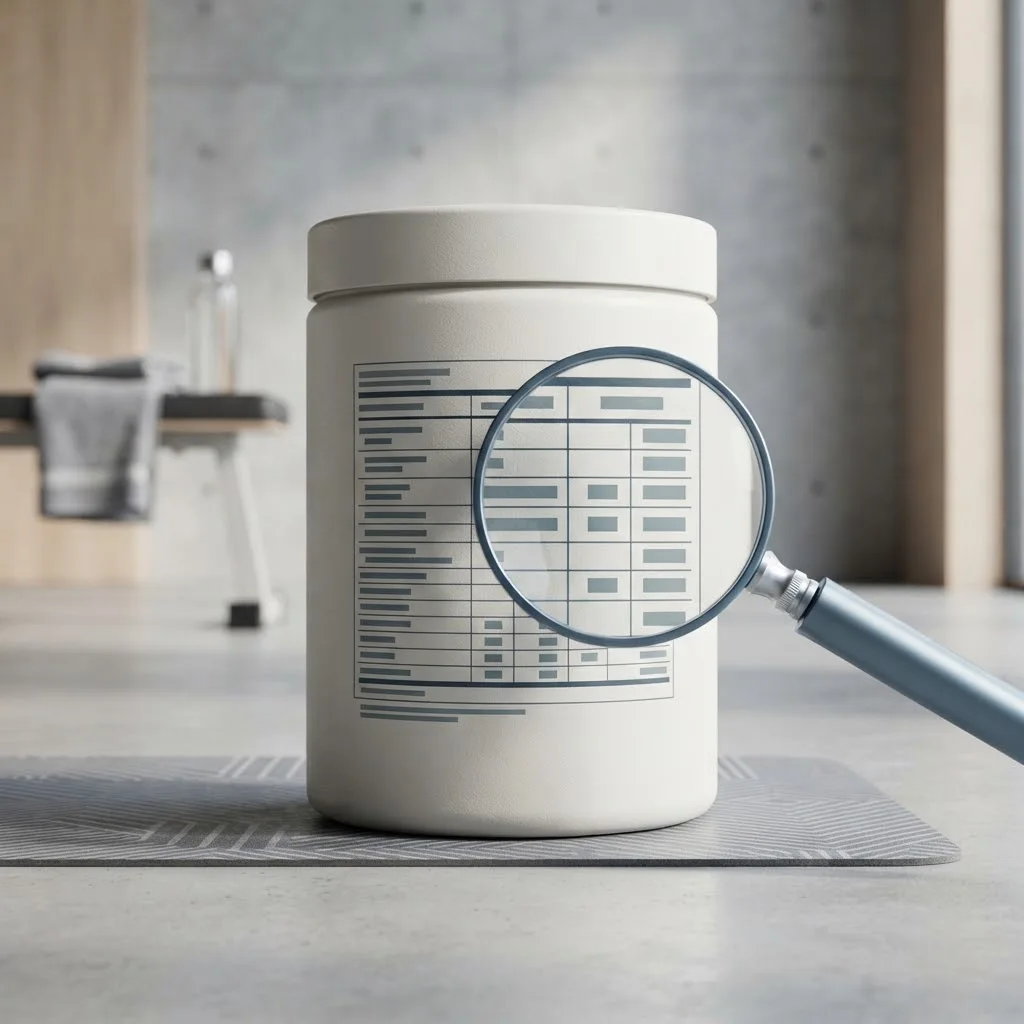
The front panel is designed to attract attention; the real decision starts with the facts panel. Two similarly named products can differ in serving size, active amount, sweeteners, caffeine, and allergens.
Quick answer
Start with serving size and servings per container. Then find each ingredient’s amount per serving, not the total scoop weight. %DV reflects a general daily benchmark and is not established for many performance ingredients; a missing %DV does not mean ineffective or safe. Finally inspect Other Ingredients, allergens, warnings, and total stimulants.
What matters
- One serving may require two scoops; compare price and dose using the true serving.
- A large protein or blend number does not reveal the target ingredient amount. Read every line and distinguish mg, g, and mcg.
- A proprietary blend states only total blend weight, hiding individual doses and making efficacy and safety harder to judge.
- Other Ingredients includes flavors, colors, capsule materials, and sweeteners relevant to allergies and tolerance.
- Add overlaps: pre-workout caffeine, coffee, and a fat burner all contribute to daily intake.
A practical approach
- Mark the serving size.
- Find active ingredients and units.
- Compare amounts with evidence.
- Read Other Ingredients and warnings.
- Total duplicate ingredients across products.
Frequently asked questions
Is a higher %DV better?
No. Needs and safe upper limits differ, and more is not automatically beneficial.
Is scoop weight the active dose?
Usually not; it can include carriers, flavors, and other ingredients.
References
- FDA — Questions and Answers on Dietary Supplements — https://www.fda.gov/food/information-consumers-using-dietary-supplements/questions-and-answers-dietary-supplements
- Operation Supplement Safety — OPSS Scorecard — https://www.opss.org/opss-scorecard
- Operation Supplement Safety — Why Third-Party Certification Is Important — https://www.opss.org/article/why-third-party-certification-important-dietary-supplements