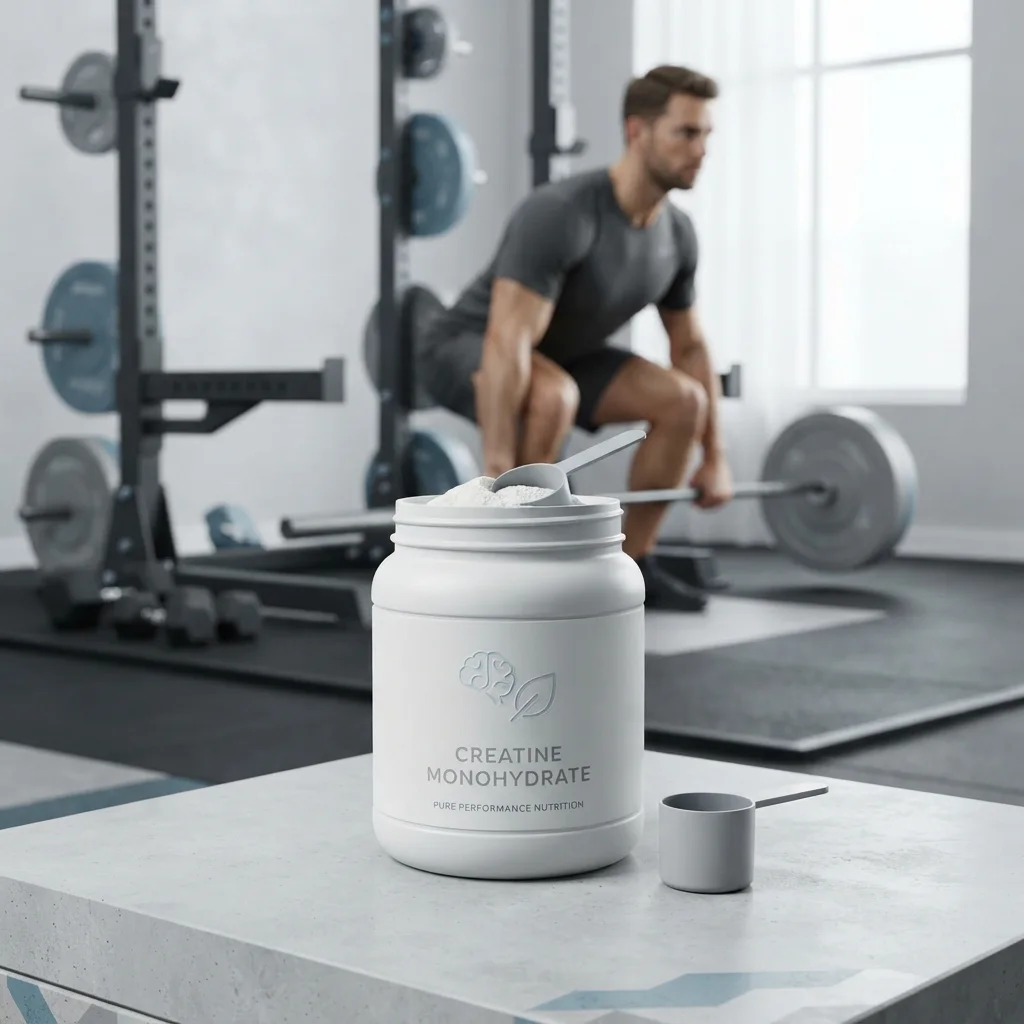
Muscle contraction consumes ATP, but direct ATP stores are limited. During the first seconds of intense effort, phosphocreatine donates phosphate to rapidly rebuild ATP. Creatine supplementation expands this reservoir.
Quick answer
The main effect is not a dramatic burst of energy. It is more often better maintenance of quality across repeated repetitions, sets, or sprints. If that capacity permits more productive weekly work, a stronger training stimulus can support greater strength and muscle over months. Some early size gain also reflects intracellular water.
What matters
- The phosphagen system matters for short, intense work and replenishes between efforts, explaining creatine’s relevance to repeated activity.
- Creatine does not directly burn fat or replace progressive overload. The outcome comes from supplementation interacting with training.
- More intracellular muscle water is part of creatine storage physiology and is not usually evidence of fat gain or harm.
- Responses differ; a person with lower baseline stores may experience a larger increase.
- Consistency matters more than exact timing because the goal is maintained saturation, not an acute pre-workout spike.
A practical approach
- Relate the mechanism to your sport.
- Record baseline performance.
- Take it consistently each day.
- Do not abruptly inflate training volume.
- Review the trend after 6–8 weeks.
Frequently asked questions
Does creatine feel stimulating like caffeine?
No. It is not a stimulant and usually creates no immediate caffeine-like sensation.
Why less effect in endurance?
Its main advantage is rapid energy regeneration during intense work, and added mass can matter in some endurance events.
References
- ISSN Position Stand: Safety and Efficacy of Creatine Supplementation — https://pubmed.ncbi.nlm.nih.gov/28615996/
- NIH Office of Dietary Supplements — Exercise and Athletic Performance Supplements — https://ods.od.nih.gov/factsheets/ExerciseAndAthleticPerformance-HealthProfessional/
- Common Questions and Misconceptions About Creatine Supplementation — https://pubmed.ncbi.nlm.nih.gov/33557850/