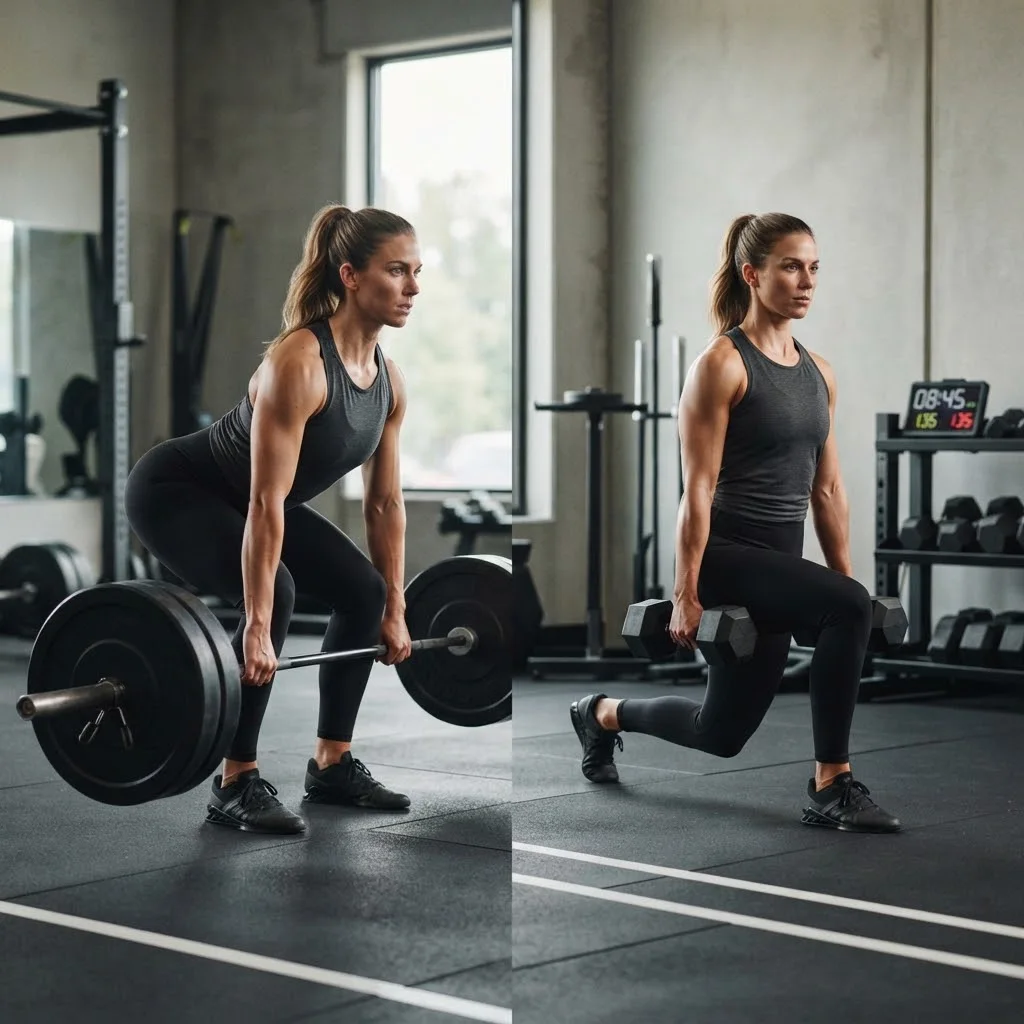
Is Heavy Training Better Than Higher-Volume Training? becomes useful only when goals, weekly schedule, volume, and recovery capacity are considered together. A routine’s name or apparent difficulty does not determine results by itself.
The short answer
Heavier loading is more specific to maximal strength, while hypertrophy depends more on enough challenging sets across useful repetition ranges. A good plan balances load and volume without exceeding recovery capacity.
What matters most
Intensity may mean percentage of 1RM or proximity to failure. A heavy load is not automatically a harder set, and light loads can also be near failure.
More volume supports growth up to a point, but returns diminish. Low-quality extra sets mainly add time and fatigue.
A practical mix uses some heavier sets for main lifts and moderate or high-repetition sets for accessories.
If strength, sleep, and motivation decline while aches rise, review training load and recovery before adding volume.
How to apply it
- Define the primary goal
- Keep main lifts relatively heavier
- Build volume with quality sets
- Adjust from progress and recovery
Common mistakes
- Copying a program designed for a different person
- Increasing load, sets, and training days all at once
- Sacrificing range and control for a bigger number
- Changing the plan before enough data are collected
Bottom line
A useful structure fits real life, can be logged, and remains sustainable for months. Start with a reasonable dose and adjust using performance, measurements, and recovery.
References
- BJSM network meta-analysis — Resistance training prescription — https://pubmed.ncbi.nlm.nih.gov/37414459/
- Systematic review and meta-analysis — Weekly volume and hypertrophy — https://pubmed.ncbi.nlm.nih.gov/27433992/