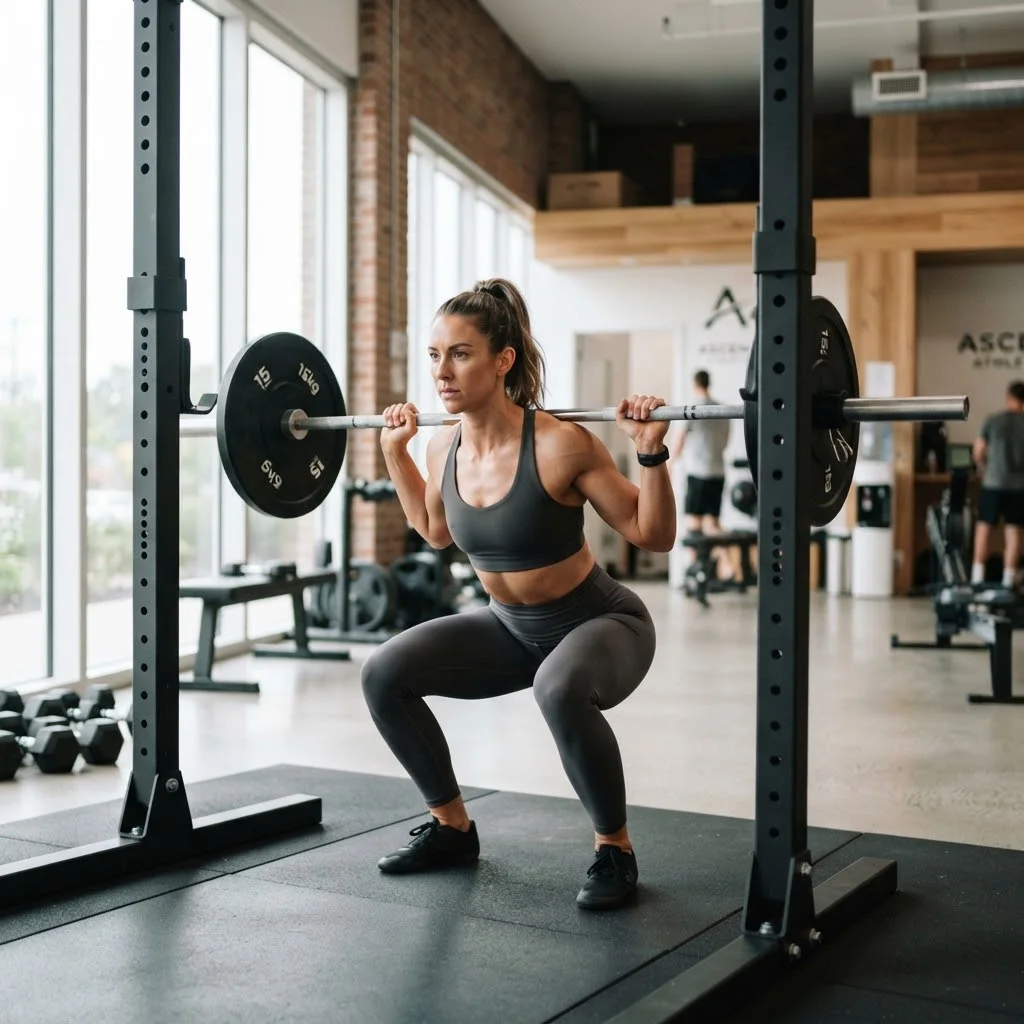
What Is Full Range of Motion and Why Does It Matter? depends on the goal, training experience, body structure, and execution quality. Instead of an absolute rule, choose an option that is pain-free, repeatable, and progressive.
The short answer
Full range means using the largest controlled, pain-free range appropriate for your body and the exercise goal. It does not mean forcing a joint to its limit or requiring an identical shape from everyone.
What matters most
Evidence generally supports full or longer ranges for strength and hypertrophy, although differences are often modest and muscle-specific.
Choose a load controlled at both ends of the range. Adding load while cutting depth makes progress comparisons unreliable.
Partial range can serve a specific goal, long-muscle-length emphasis, or temporary limitation, but it should be deliberate rather than caused by excessive load.
Reduce the range and investigate if pain, joint catching, numbness, or radiating symptoms occur. Do not push through sharp pain.
How to apply it
- Find your pain-free controlled range
- Control the load through the entire path
- Keep depth and endpoints consistent
- Use partials only for a defined purpose
Common mistakes
- Copying a program designed for a different person
- Increasing load, sets, and training days all at once
- Sacrificing range and control for a bigger number
- Changing the plan before enough data are collected
Bottom line
A good choice matches the goal and allows progress to be tracked. Keep standards consistent, collect several weeks of data, and then adjust from results.
References
- Systematic review and meta-analysis — Full versus partial range of motion — https://doi.org/10.47206/ijsc.v3i1.182
- Umbrella review — Resistance training variables and hypertrophy — https://pmc.ncbi.nlm.nih.gov/articles/PMC9302196/