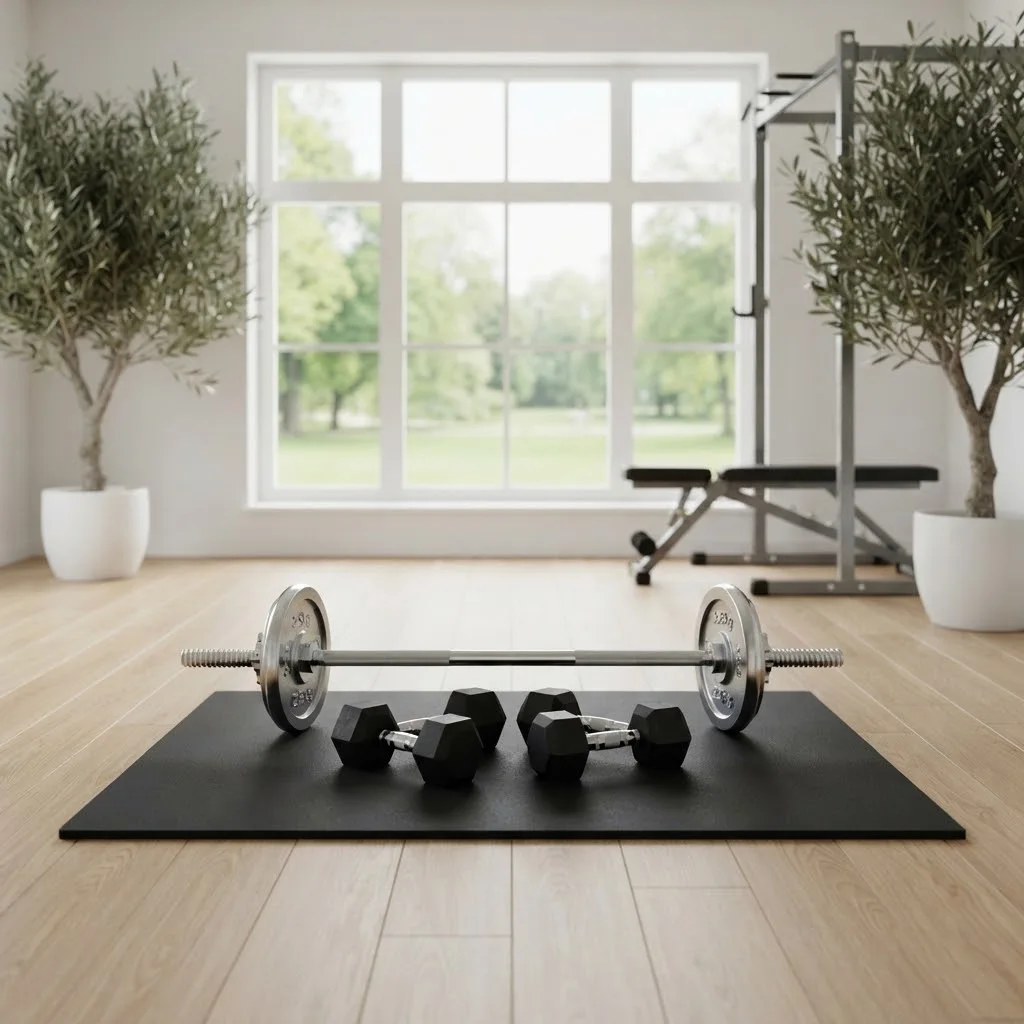
Are Dumbbells or Barbells Better? depends on the goal, training experience, body structure, and execution quality. Instead of an absolute rule, choose an option that is pain-free, repeatable, and progressive.
The short answer
Barbells usually allow greater total loading and smaller progression steps, while dumbbells provide more path freedom, unilateral work, and sometimes greater range. The choice depends on the exercise, goal, and joint comfort.
What matters most
Barbell-specific strength requires practicing the barbell lift, but hypertrophy does not depend on one tool.
Dumbbells reveal side-to-side differences and allow a more natural hand path, although positioning heavy dumbbells can become limiting.
A barbell provides stability and easy tracking, but its fixed hand relationship may be uncomfortable for some shoulders.
Use a barbell for a main lift and dumbbells for a second movement, or rotate tools across phases; neither must be eliminated.
How to apply it
- Define the lift and main goal
- Test joint comfort
- Choose the tool that can be tracked and progressed
- Add the second tool for purposeful variety
Common mistakes
- Copying a program designed for a different person
- Increasing load, sets, and training days all at once
- Sacrificing range and control for a bigger number
- Changing the plan before enough data are collected
Bottom line
A good choice matches the goal and allows progress to be tracked. Keep standards consistent, collect several weeks of data, and then adjust from results.
References
- Systematic review and meta-analysis — Free weights versus machines — https://pubmed.ncbi.nlm.nih.gov/37582807/
- Umbrella review — Resistance training variables and hypertrophy — https://pmc.ncbi.nlm.nih.gov/articles/PMC9302196/