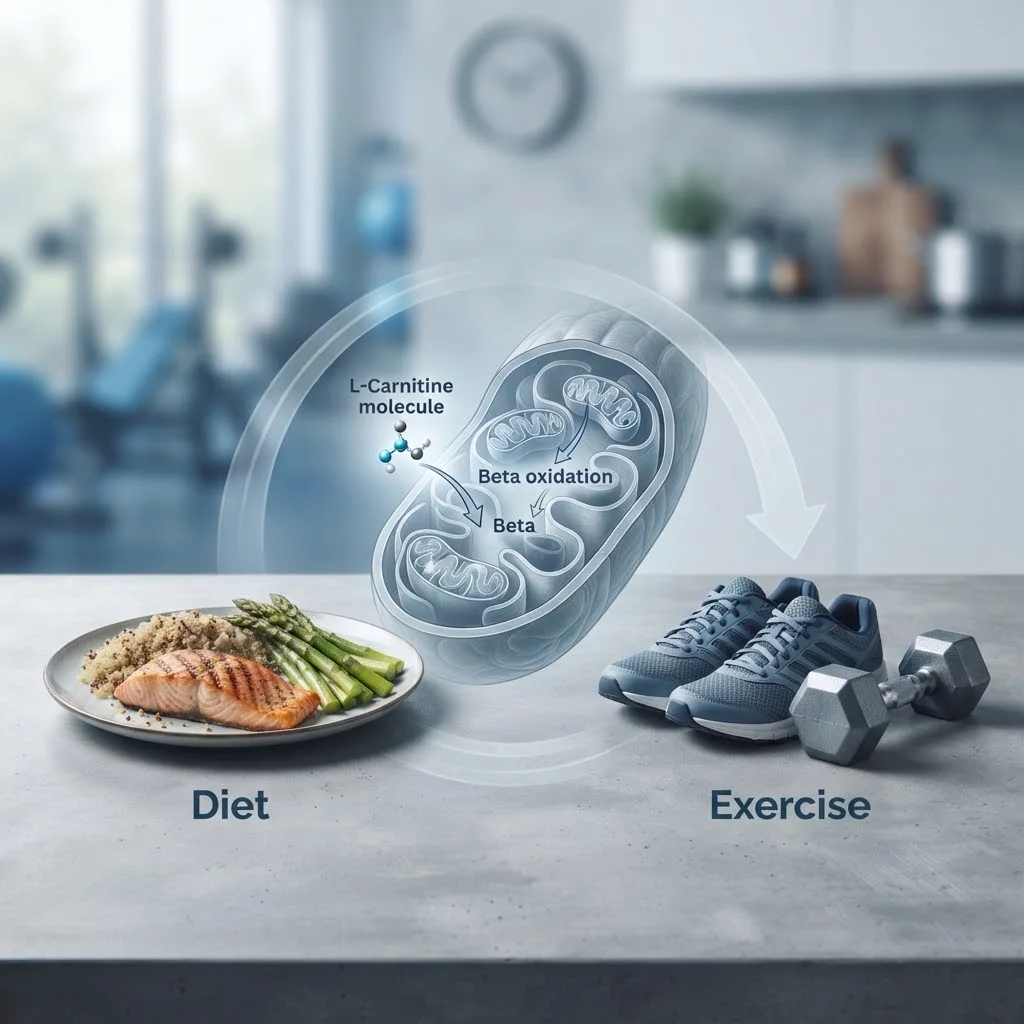
For a healthy active person, L-carnitine cannot replace a calorie deficit; average weight-loss effects in research are small and context-dependent. A useful decision separates mechanism, effect size and evidence limits from marketing.
Quick answer
A role in fat transport does not mean more supplemental carnitine accelerates fat loss. Without deficiency, carnitine availability is usually not the limiting step. A sustainable diet, activity and muscle retention have much larger effects. Practical value must be interpreted alongside the whole diet, training plan, budget and individual tolerance.
What matters
- Do not equate package claims with research outcomes.
- Read the exact active-ingredient amount.
- Judge effects with real outcomes such as performance, weight or waist.
- A supplement should not harm sleep, digestion or diet quality.
- Medical conditions or medicines require professional advice.
A practical approach
- Define the real goal and problem.
- Track food, sleep and training for two weeks.
- If needed, test one supplement conservatively.
- Monitor benefits and adverse effects.
- Stop spending if no clear value appears.
Frequently asked questions
Does everyone respond equally?
No; baseline status, diet, training and individual response differ.
When should it be stopped?
When adverse effects occur or structured evaluation shows no benefit.
References
- L-Carnitine Supplementation and Weight Loss: Systematic Review and Meta-Analysis — https://pubmed.ncbi.nlm.nih.gov/27335245/
- NIH ODS — Dietary Supplements for Weight Loss — https://ods.od.nih.gov/factsheets/WeightLoss-HealthProfessional/
- NIH ODS — Dietary Supplements for Exercise and Athletic Performance — https://ods.od.nih.gov/factsheets/ExerciseAndAthleticPerformance-HealthProfessional/