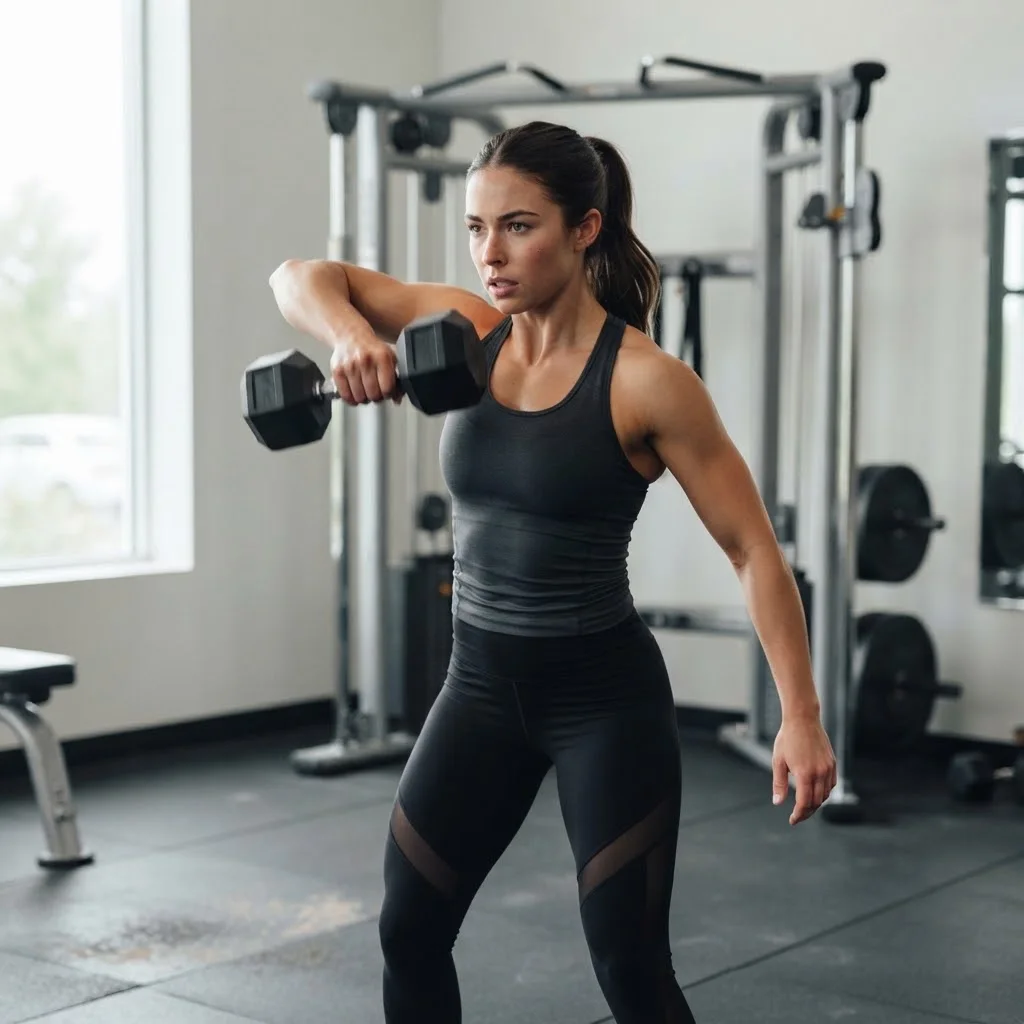
Can You Build Muscle with Light Weights? becomes useful only when goals, weekly schedule, volume, and recovery capacity are considered together. A routine’s name or apparent difficulty does not determine results by itself.
The short answer
Yes. Light loads can build muscle, especially when sets finish close to failure and enough volume is performed. Very light loads require long, uncomfortable sets and are not the primary choice for maximal strength.
What matters most
Meta-analyses report similar hypertrophy with lower and higher loads when effort is sufficient, while 1RM strength generally favors heavier loading.
Stopping too early can make light-load sets ineffective. RIR is harder to judge at high repetitions, and burning is not identical to true failure.
Light loads help with sensitive joints, home training, return phases, or isolation exercises when pain and technique are controlled.
Not every exercise needs light loading. Moderate loads for most work plus lighter loads for selected movements is often more practical.
How to apply it
- Use a 15–30 repetition range
- Finish one to three repetitions from failure
- Maintain technique and range
- Increase load if sets become excessively long
Common mistakes
- Copying a program designed for a different person
- Increasing load, sets, and training days all at once
- Sacrificing range and control for a bigger number
- Changing the plan before enough data are collected
Bottom line
A useful structure fits real life, can be logged, and remains sustainable for months. Start with a reasonable dose and adjust using performance, measurements, and recovery.
References
- Systematic review and meta-analysis — Low versus high load training — https://pubmed.ncbi.nlm.nih.gov/28834797/
- BJSM network meta-analysis — Resistance training prescription — https://pubmed.ncbi.nlm.nih.gov/37414459/