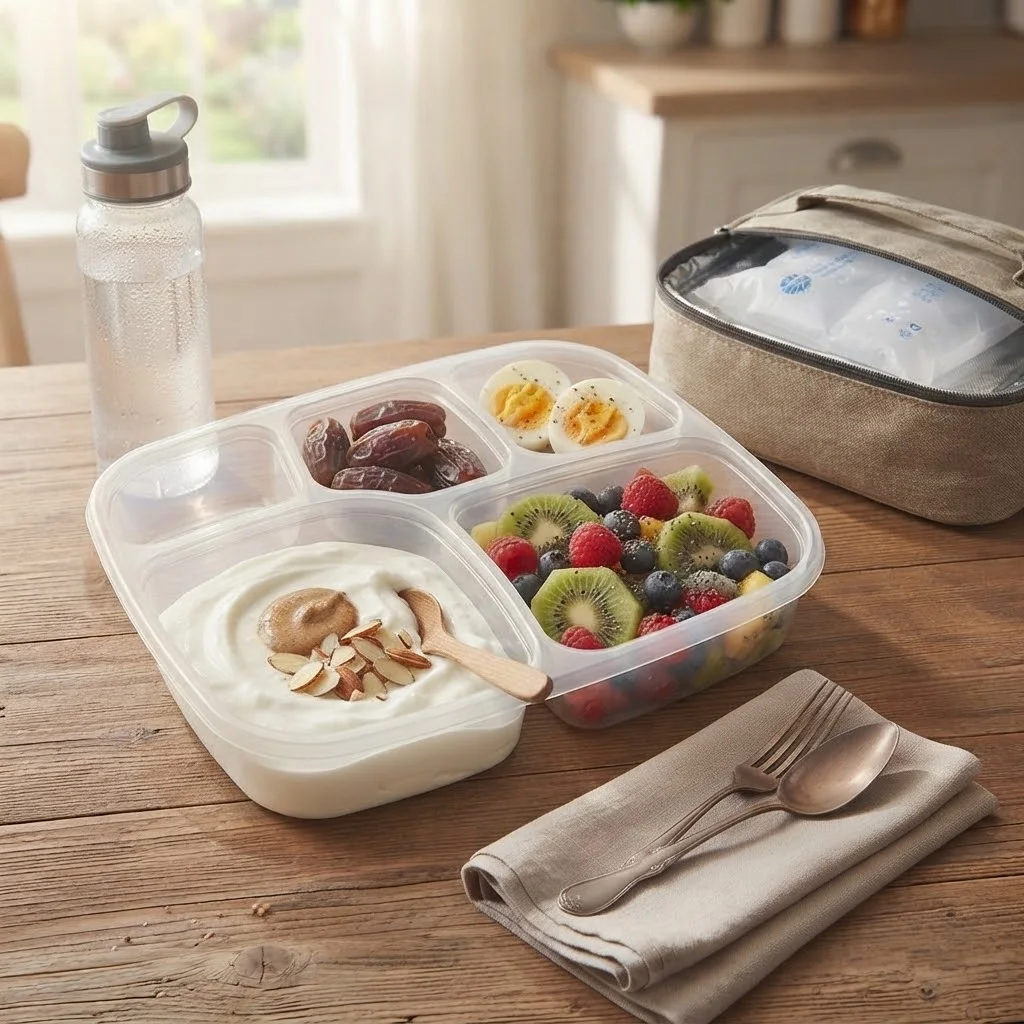
No food becomes the best snack simply because it carries a fitness label. A snack is useful when it solves a real problem: preventing excessive hunger, supplying pre-workout fuel, completing daily protein, or adding calories during a gaining phase. If main meals cover your needs, snacks are optional.
The short answer
A good snack fills a real gap between meals and can provide protein, carbohydrate, fluid, or extra calories according to the athlete’s goal.
Before training
With 30–90 minutes available, choose a small digestible option such as banana, dates, toast with honey, or yogurt and fruit. Keep fat and fiber lower if your stomach is sensitive. A short easy session may require no snack, especially after a recent meal.
To add protein
Greek yogurt, milk, cottage cheese, eggs, a small chicken or tuna sandwich, soy milk, and tofu are useful choices. Evaluate snack protein within the entire day; an expensive protein bar is unnecessary when regular meals already cover the target.
For gaining or cutting
During a gaining phase, use more energy-dense combinations such as milk, banana, oats, and peanut butter or nuts with dried fruit. During a cut, lower-fat yogurt and fruit, vegetables with yogurt, plain popcorn, or eggs and vegetables provide more volume for controlled calories.
How to judge a snack
Read the label for actual protein, added sugar, serving size, and calories. Terms such as energy, diet, or protein bar do not guarantee quality. A useful snack should be portable, digestible, goal-aligned, and realistically available so that the plan remains sustainable.
Practical checklist
- Match portion size to calorie goals and training volume.
- Test unfamiliar food on an ordinary day first.
- Individualize general advice when a medical condition is present.
Bottom line
A useful plan meets daily needs and remains repeatable for weeks and months. One meal cannot repair an inadequate diet, and one imperfect choice does not erase the results of a consistent pattern.
References
- Nutrition and Athletic Performance — Academy of Nutrition and Dietetics, Dietitians of Canada and ACSM — https://pubmed.ncbi.nlm.nih.gov/26920240/
- ISSN Position Stand: Protein and Exercise — https://pubmed.ncbi.nlm.nih.gov/28642676/
- Dietary Fiber and Appetite Regulation — Review — https://pubmed.ncbi.nlm.nih.gov/36193993/