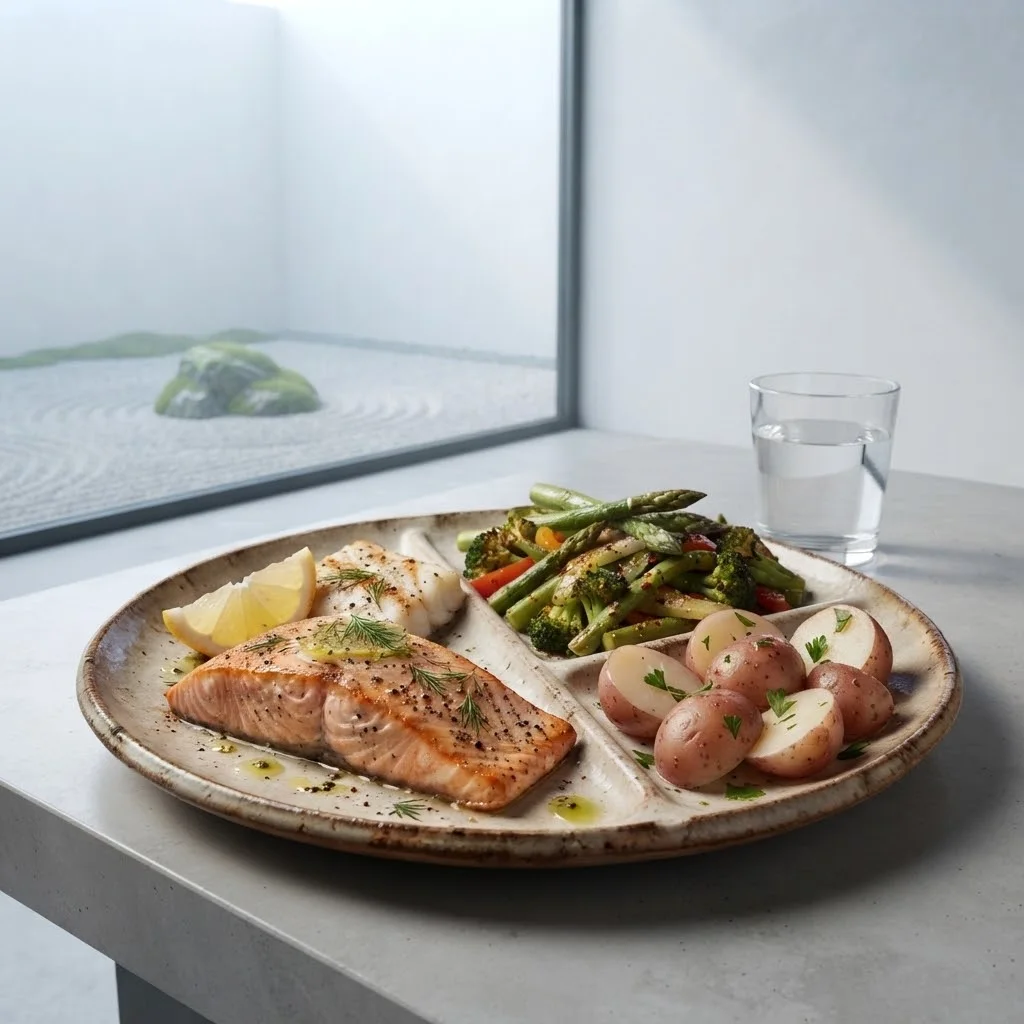
A cutting dinner does not mean going to bed hungry or banning rice and bread. Fat loss comes from a sustainable calorie deficit, while adequate protein and resistance training help preserve muscle. Dinner should fit the day’s calorie budget, manage evening hunger, and remain comfortable for sleep and digestion.
The short answer
A cutting dinner should control calories while providing adequate protein and satisfying portions of vegetables and whole foods.
Make protein the anchor
Poultry, fish, lean meat, eggs, Greek yogurt, lower-fat cheese, soy, or legumes can anchor dinner. Roughly 25–40 g of protein is practical for many active adults, but the exact serving should fit body size and total daily protein.
Use volume with fewer calories
Salad without calorie-heavy dressing, cooked vegetables, vegetable soup, and mushrooms add volume. Oils, nuts, full-fat cheese, and sauces can be nutritious or tasty but calories accumulate quickly, so measure energy-dense additions during a cut.
Carbohydrate at night is not forbidden
Rice, bread, potatoes, or legumes at night do not independently cause fat gain. Long-term calorie balance matters more. If you train in the evening, a controlled carbohydrate serving can support recovery and training quality.
Simple examples
Chicken and vegetables with measured rice; fish and potatoes with salad; an egg-and-egg-white omelet with vegetables and bread; or lentils with lower-fat yogurt. Portion sizes should come from your calorie plan rather than a universal online menu.
Practical tips
- Match portions to calorie goals and training volume.
- Test unfamiliar foods before competition day.
- One food cannot replace overall diet quality.
Bottom line
A useful choice fits your goal, digestion, training time, and daily routine. Instead of rigid rules, evaluate energy, performance, hunger, and weight trends.
References
- Nutrition and Athletic Performance — Academy of Nutrition and Dietetics, Dietitians of Canada and ACSM — https://pubmed.ncbi.nlm.nih.gov/26920240/
- ISSN Position Stand: Protein and Exercise — https://pubmed.ncbi.nlm.nih.gov/28642676/