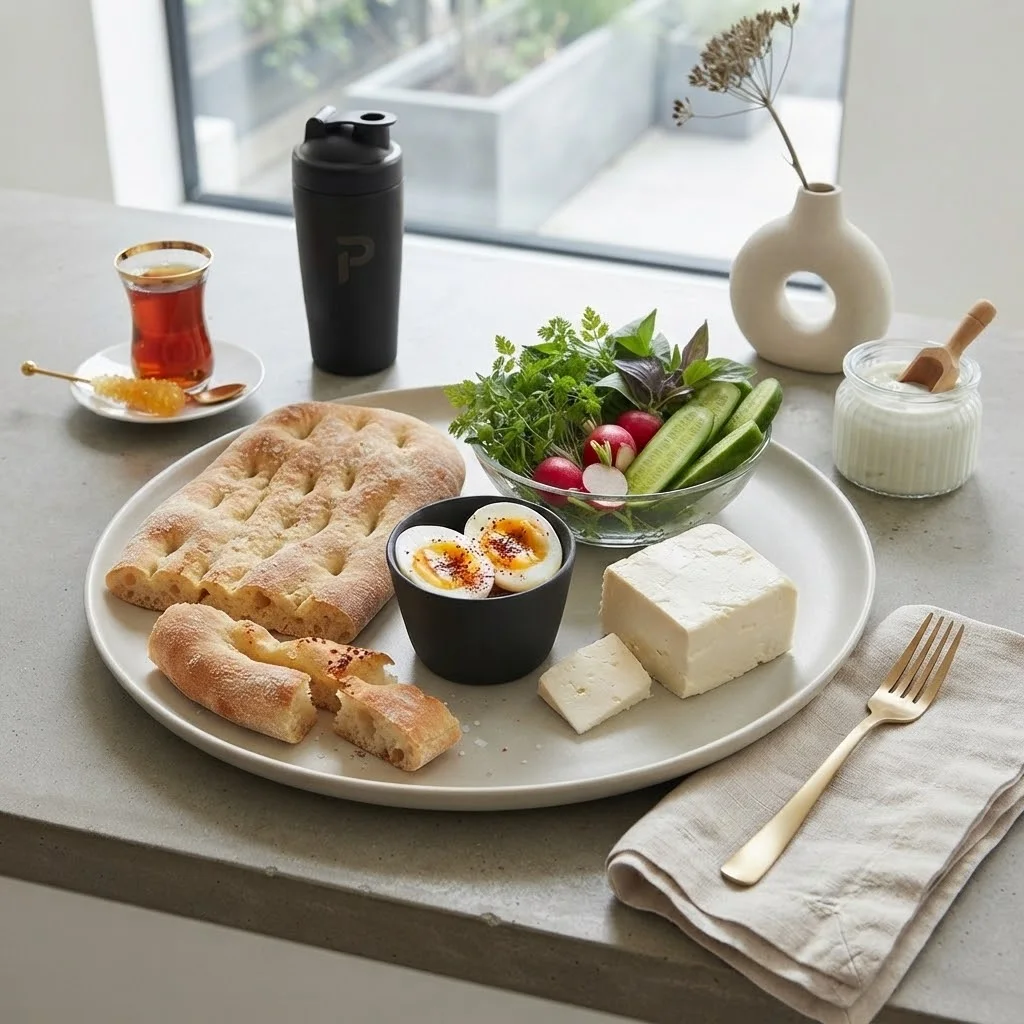
Fresh barbari bread; bakery-dependent can fit an athlete diet, but labels such as “muscle-building” or “fat-burning” exaggerate what one food can do. Its practical value depends on nutrient profile, portion size, and how it fits the full plan.
Nutrition per 100 g
The table describes 100 g of the edible portion of fresh Barbari bread; bakery-dependent in its ready to eat state. Product type, variety, and preparation can change the values, so do not mix raw with cooked or fresh with dried data.
| Nutrient | Amount |
|---|---|
| Energy | 270 kcal |
| Protein | 9.0 g |
| Carbohydrate | 54.0 g |
| Fat | 2.5 g |
| Fiber | 3.0 g |
| Sugar | 2.5 g |
| Potassium | 190 mg |
How to use it before training
Stomach comfort matters near exercise. Dried carbohydrate-rich foods provide concentrated energy, while high-fiber or high-fat foods may need more time for some people. Do not test an unfamiliar choice for the first time on competition day.
Its role after training
This food alone is not a complete recovery meal. Consider protein, carbohydrate, fluids, and total daily energy. Depending on the food, combine it with yogurt, milk, eggs, meat, fish, soy, or legumes.
Cutting and gaining
During a cut, count the portion and additions. During gaining, nutritious does not mean unlimited. Dried or fat-rich foods are more energy-dense, while watery vegetables mainly add meal volume and variety.
What matters about this food
Barbari is thicker, so a visually small piece may weigh more than expected. Seeds, glaze, flour, and moisture affect final values. It can accompany eggs, lower-fat cheese, meat, and vegetables, but the portion should fit the calorie goal. Table values are illustrative estimates.
A common mistake
No single food determines training results. Look at average daily energy and protein, training quality, digestion, sleep, and multi-week trends in weight and performance.
Bottom line
Fresh barbari bread; bakery-dependent is useful when its portion and preparation match your goal. Treat it as one part of a varied diet, not as a replacement for a balanced meal or training plan.
References
- USDA FoodData Central — https://fdc.nal.usda.gov/
- WHO — Healthy Diet — https://www.who.int/news-room/fact-sheets/detail/healthy-diet
- Nutrition and Athletic Performance — Academy of Nutrition and Dietetics, Dietitians of Canada and ACSM — https://pubmed.ncbi.nlm.nih.gov/26920240/
- FAO — Iranian Food Composition Table — https://www.fao.org/food-composition/tables-and-databases/detail/%28iran--2017%29-iranian-food-composition-table/en